Does Homeowners Insurance Cover Water Damage? What Florida Policies Really Pay For
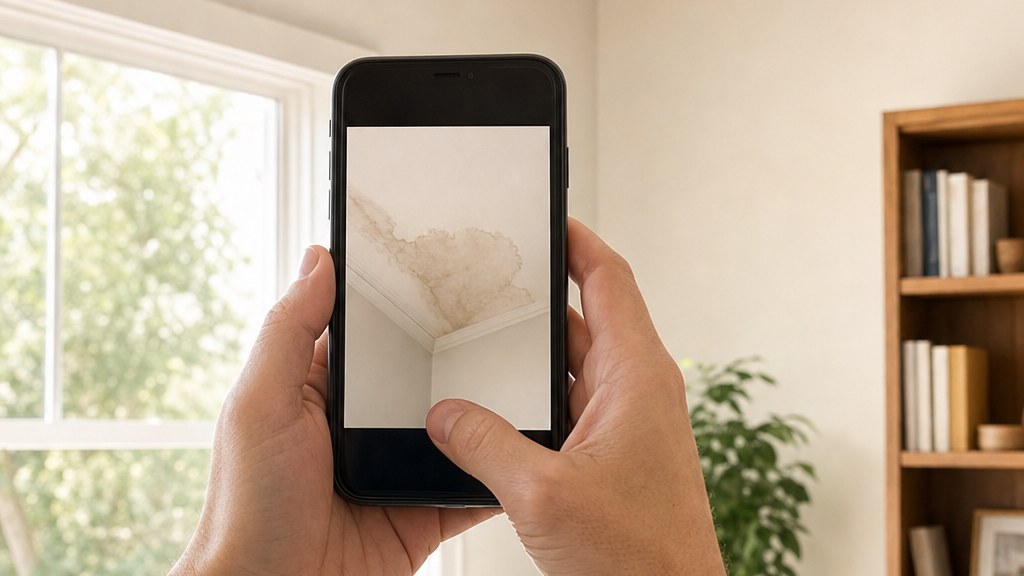
A wet ceiling in August raises two questions at once: what caused it, and who pays. This guide walks through what a Florida homeowners policy actually covers, what it excludes, and how hurricane season changes the answer.
TL;DR:
- Yes, standard homeowners insurance covers water damage that is sudden and accidental: burst pipes, appliance failures, and rain entering through storm-created openings.
- It does not cover gradual leaks, seepage, poor maintenance, or flood (rising water), which includes hurricane storm surge. Flood needs its own policy.
- In a hurricane, the water's source decides everything: wind-driven rain is typically a homeowners claim, rising water is a flood claim, and a hurricane deductible (often 2%-10% of your dwelling limit) applies to the wind side.
- Florida law gives you 1 year from the date of loss to report a new claim and requires your insurer to pay or deny within 60 days.
- Water claims are among the most disputed in Florida. Document everything before you clean up, and get help early if the numbers look wrong.
Homeowners insurance covers water damage when the cause is sudden and accidental, such as a burst pipe, a failed supply line, an overflowing appliance, or rain entering through an opening a storm just created. It does not cover water damage that happens slowly (seepage, long-term leaks, deferred maintenance) or water that rises from outside the home, which insurers classify as flood and exclude entirely. The standard HO-3 policy covers "accidental discharge or overflow of water or steam" from plumbing, HVAC, sprinkler systems, or household appliances, per the Insurance Information Institute.
That distinction, sudden versus gradual and falling versus rising, decides more Florida water claims than any other factor, and it is where insurers find most of their reasons to underpay or deny. Vanguard Claims Solutions handles water damage claims across Florida and South Carolina, and this article covers what we verify on every one of them.
Does homeowners insurance cover water damage?
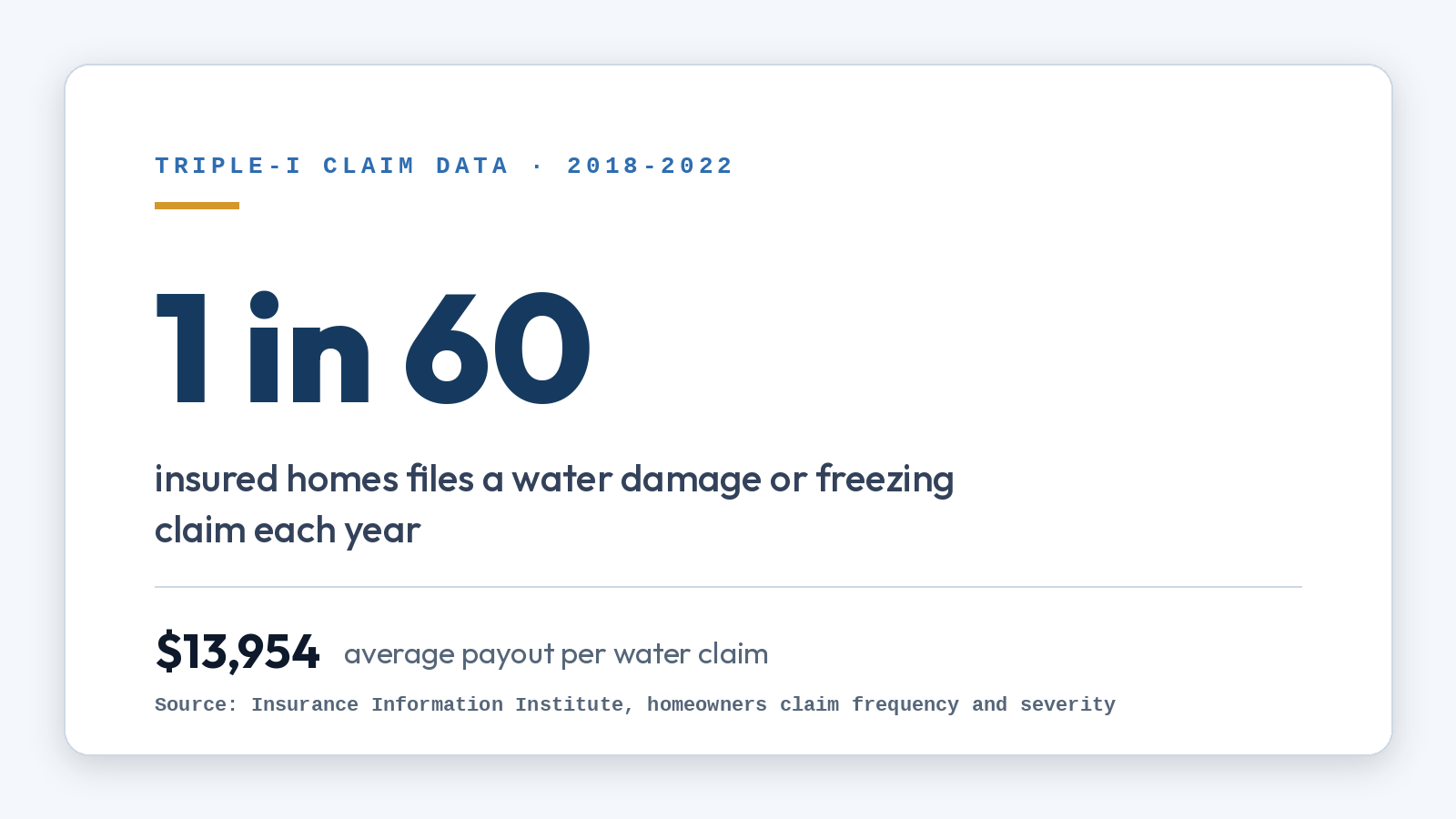
Yes, standard homeowners insurance covers water damage from sudden, accidental events inside the home, and it is one of the most common claims in the country. According to Triple-I claim data, about one in 60 insured homes files a claim for water damage or freezing each year, with an average payout of $13,954 over 2018-2022.
A typical HO-3 policy pays for water damage under several coverages at once:
- Dwelling (Coverage A): the structure, including soaked drywall, flooring, and cabinets.
- Other structures (Coverage B): detached garages, fences, sheds.
- Personal property (Coverage C): furniture, electronics, clothing.
- Loss of use (Coverage D): additional living expenses if the home is uninhabitable during repairs.
The trigger is the peril, not the water itself. Insurers ask: what caused the water to be where it should not be, and did it happen suddenly? A pipe that ruptured Tuesday night is generally covered. A supply line that has been weeping into the wall cavity since spring means a fight, and the next section explains why.
What water damage is covered, and what is excluded?
The dividing line is "sudden and accidental" versus gradual, and it is written directly into the policy. Sudden and accidental water damage is a covered peril on standard homeowner forms; gradual damage is treated as a maintenance failure, and maintenance is your responsibility, not the insurer's.
| Water event | Covered by homeowners? | Why |
|---|---|---|
| Burst pipe or failed supply line | Usually yes | Sudden and accidental discharge |
| Water heater or washing machine failure | Usually yes | Sudden appliance discharge |
| Rain through a wind-damaged roof | Usually yes | Wind created the opening (a covered peril) |
| AC drain line overflow | Often yes, if sudden | Accidental discharge from an HVAC system |
| Slow leak inside a wall over weeks or months | Usually no | Gradual damage / seepage exclusion |
| Rot, corrosion, deferred maintenance | No | Maintenance exclusion |
| Sewer or drain backup | No, unless endorsed | Standard exclusion; needs a water backup endorsement |
| Rising water, storm surge, overflowed canal | No | Flood exclusion; separate flood policy required |
Sudden and accidental water damage
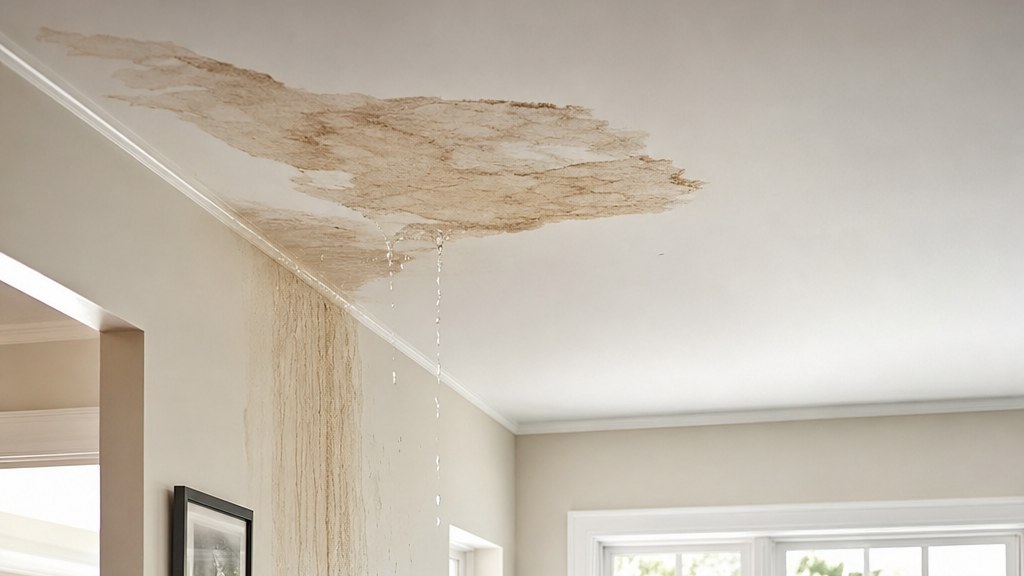
This is the covered core: an identifiable event with a before and after. The pipe was intact, then it was not. Insurers rarely dispute that these events are covered perils; the disputes come later, over scope and price.
Gradual damage, seepage, and maintenance
Most policies exclude damage from water that leaks or seeps over a period of time. The practical problem: homeowners usually discover slow leaks suddenly. You find the buckled floor today, but the leak started months ago behind the dishwasher, and insurers lean on that timeline to call the whole loss "gradual" and deny it. The date of discovery, the condition of the plumbing, and a plumber's or leak-detection report often decide these claims, so preserve all three.
Does homeowners insurance cover roof leaks?
Yes, when a covered peril caused the leak; no, when the roof simply wore out. If wind or hail opens your roof and rain follows, both the roof repair and the interior water damage are typically covered, because windstorm is a named peril on every standard form tracked by the Insurance Information Institute. If shingles reached the end of their life and water found its way in, insurers treat it as wear and tear and exclude it. In Florida the difference between "wind-lifted shingles" and "aged shingles" is frequently a matter of expert opinion, not obvious fact, so photograph the roof and the interior before any tarping or repair if it is safe to do so.
Pro Tip: Photograph and video everything (the source, the standing water, every damaged room) before a remediation crew tears anything out; you cannot re-create evidence that has been hauled to a dumpster.
Does hurricane insurance cover water damage?
Hurricane coverage pays for water damage caused by wind, and nothing caused by rising water. "Hurricane insurance" in Florida is not a separate policy; it is the windstorm peril inside your homeowners policy, subject to a special hurricane deductible. During a hurricane, water attacks a house from two directions, and the policy treats them differently:
- Wind-driven rain entering through an opening the storm created (torn roof, blown-out window, breached door) is generally a covered homeowners claim, as consumer guides from United Policyholders explain.
- Rising water, including storm surge and rain-driven flooding from the ground up, is excluded as flood no matter what pushed the water.
When a house takes both wind and surge in the same storm, each policy pays only its own peril, and the argument over which water did what becomes the claim.
The hurricane deductible
Florida insurers must offer hurricane deductibles of $500, 2%, 5%, or 10% of your dwelling coverage, applied per calendar year rather than per storm, per the Florida Department of Financial Services. On a $400,000 dwelling limit, a 2% deductible means the first $8,000 of wind damage is yours; at 10% it is $40,000. Many underpaid hurricane water claims are really deductible problems: the insurer's low scope never climbs far enough past the deductible to produce a meaningful check.
Anti-concurrent causation: when wind and water hit together
Many policies contain anti-concurrent causation language saying that if an excluded peril (flood) contributes to a loss "in any sequence" with a covered peril (wind), the insurer may deny the loss. After a landfall, that clause becomes the battleground for every house that took both wind and surge. Florida's Office of Insurance Regulation pushed back after the 2024 season: in a February 2025 memorandum, Commissioner Michael Yaworsky reminded insurers that concurrent-causation claims must be well documented and determined in accordance with Florida law, and warned that improperly handled wind-versus-water denials would bring administrative action and restitution to consumers. If your hurricane claim was denied because "the damage was caused by flood," that determination deserves independent scrutiny. Our hurricane damage claims work is largely about separating wind damage from water damage, opening by opening and room by room.
Do you need flood insurance too?
If you live in Florida during hurricane season, almost certainly yes, because your homeowners policy will pay nothing for rising water. In insurance terms, flood means a general and temporary condition of partial or complete inundation of two or more acres of normally dry land, or of two or more properties, at least one of which is yours, per the Florida DFS flood insurance overview. Storm surge fits that definition. So does street flooding from a stalled tropical system that never reaches hurricane strength.
The numbers argue for the policy. FEMA's FloodSmart program calculates that just one inch of floodwater can cause roughly $25,000 of damage to an average home. NFIP policies for single-family homes cover up to $250,000 for the building and $100,000 for contents; private or excess flood coverage fills the gap above that. And timing matters: a new flood policy generally carries a 30-day waiting period, so a policy bought when a storm appears on the forecast cone will not respond to that storm.
Pro Tip: Peak hurricane season runs through October; if you are buying flood coverage this year, buy now so the 30-day waiting period expires before the heart of the season, not during it.
What should you do in the first 48 hours after finding water damage?
Stop the water, document the loss, mitigate further damage, and report the claim promptly, in that order. Here is the sequence we recommend:
- Stop the source. Shut the supply valve or the main. If the water is storm-driven, tarp or board the opening once it is safe.
- Document before you touch anything. Photos and video of the source, the water line, every affected room, and damaged contents. Keep the failed part (the burst pipe section, the ruptured hose); it is physical evidence of a sudden event.
- Mitigate. Your policy requires reasonable steps to prevent further damage: extract standing water, dry the structure, move undamaged contents. Keep every receipt; reasonable mitigation costs are generally reimbursable.
- Report the claim in writing. Florida law gives you 1 year from the date of loss to give notice of a new claim, and 18 months for a supplemental claim for policies effective on or after December 16, 2022. Do not use the full year; evidence degrades fast in a wet house.
- Know the insurer's clock. Under Fla. Stat. § 627.70131, your insurer must acknowledge your communication within 7 calendar days, begin its investigation within 7 days of receiving your proof of loss, conduct any physical inspection within 30 days of the proof of loss, and pay or deny the claim within 60 days of notice. Keep a dated log of every call and email.
- Get an independent damage assessment before accepting a number. Clawing back a low scope later means supplemental claims and more deadlines. Our guide to Florida claim deadlines lays out the full timeline.
For South Carolina homeowners, the same coverage principles apply, and South Carolina law sets a 3-year limitation period for contract actions, including suits on insurance policies, under S.C. Code Ann. § 15-3-530. Report promptly regardless; policies require prompt notice.
Why do water damage claims get underpaid or denied?
Because water claims sit on top of the most heavily litigated exclusions in property insurance, and because quiet policy limits cap what insurers pay even when they accept coverage. The patterns we see most:
- The gradual-damage recharacterization. The adjuster's report describes your burst-pipe loss as "long-term seepage" or "wear, tear, and deterioration," converting a covered claim into an excluded one. The counter is evidence: the failed part, plumber's findings, moisture mapping, and a timeline showing sudden onset.
- Wind-versus-flood causation calls after hurricanes. Anti-concurrent causation language lets insurers attribute damage to excluded rising water. Florida's regulator has warned insurers about abusing this, but the burden of building the wind story still lands on the policyholder.
- Water damage sublimits. Citizens Property Insurance, the state-backed insurer, applies a $10,000 limit on accidental discharge or overflow water losses on many of its policy forms unless the policyholder uses its managed repair program, and private carriers sell similar "limited water damage" endorsements in exchange for lower premiums. Check your declarations page before you assume full limits apply.
- Mold sublimits. Water damage left wet becomes mold damage, and policies typically cap mold remediation at between $1,000 and $10,000 regardless of your dwelling limit. Fast drying protects both your house and your recovery.
- Scope and pricing gaps. Even accepted claims come back thin: drying but no tear-out, paint but no flooring continuity, no allowance for code-required work. The first estimate is an opening position, not a verdict. If your claim was denied or the number will not fund the repairs, that is what our denied and underpaid claims service exists for.
This article is general information, not legal advice; coverage always depends on your specific policy language and the facts of your claim.
Key Takeaways
| Point | Details |
|---|---|
| Sudden and accidental water damage is covered | Burst pipes, appliance failures, and rain through storm-created openings are covered perils on an HO-3 |
| Gradual damage and flood are excluded | Slow leaks, seepage, and maintenance failures are denied; rising water (including storm surge) needs a flood policy |
| Hurricanes split the water bill | Wind-driven rain goes to homeowners insurance with a 2%-10% hurricane deductible; rising water goes to flood insurance |
| Flood insurance has a waiting period | NFIP policies generally take effect 30 days after purchase, so buy before a storm is on the map |
| Florida deadlines run both ways | You have 1 year to report a new claim (18 months supplemental); the insurer has 60 days to pay or deny |
| Sublimits quietly cap payouts | Water damage caps (like Citizens' $10,000) and mold sublimits ($1,000-$10,000 typical) shrink recovery unless documented and challenged |
What we see in the field
The most consistent pattern in Florida water claims is the timeline fight. We rarely see an insurer dispute that a ruptured supply line is a covered peril. Instead we see a report that quietly re-dates the loss: staining "consistent with long-term moisture exposure," corrosion "indicating deterioration over time." The damage has not changed, but the claim has moved from covered to excluded in two sentences. The homeowners who beat that move kept the broken part, got a plumber's written findings, and photographed the loss the day they found it.
In hurricane season the fight changes shape. After a landfall, we walk houses where the roof planes show clear wind damage and the interior shows ceiling-down staining, yet the carrier's letter attributes the loss to flood because the neighborhood also took surge. Wind and flood leave different fingerprints: water lines on the walls show how high the rising water reached, and damage above that line with a storm-created opening overhead is a wind story. Building that record takes hours on a roof and in an attic, which is precisely the work a desk review never does.
The sublimit surprises are the quietest losses of all. A homeowner with $350,000 in dwelling coverage assumes a $60,000 water loss is safely inside limits, then discovers a limited-water-damage endorsement capping the whole event at $10,000. Nobody re-reads their declarations page in the middle of a flood cut; we do it at the start of every claim, because the policy you actually have sets the ceiling for everything that follows.
And on mold: the sublimit clock effectively starts the day the water hits. Every day a wet wall cavity sits undried moves dollars from the well-covered water claim into the thinly-covered mold bucket. Fast, documented drying is claim strategy, not just building science.
- The Vanguard field team
How Vanguard Claims Solutions helps
If you are staring at a wet ceiling or a post-storm water line, we will read the policy, inspect the damage, and build the claim the way carriers actually evaluate them. The claim review is free, there are no upfront fees, and we work on contingency: no recovery, no fee, with the fee for your claim set out in the written contingency agreement before you sign. Vanguard Claims Solutions is licensed in Florida and South Carolina, led by public adjuster Andrew Pichardo (FL License #W493213, SC License #18873906). Call (305) 336-3302 or request your free claim review.
FAQ
Does homeowners insurance cover water damage from rain?
Only when the rain gets in through an opening created by a covered peril, such as wind ripping off shingles or hail breaking a window. Rain that enters through a pre-existing gap, a worn roof, or ground-level flooding is excluded. Document the opening itself, not just the wet interior.
Is a water leak considered a flood by insurance?
No. Flood means rising surface water inundating normally dry land, generally affecting two or more acres or two or more properties. A leak from your plumbing, roof, or appliances is water damage under your homeowners policy, not flood, no matter how much water ends up on the floor.
How long do I have to file a water damage insurance claim in Florida?
For policies effective on or after December 16, 2022, you have 1 year from the date of loss to report a new claim and 18 months for a supplemental claim under Fla. Stat. § 627.70132. Report as early as you can anyway; wet evidence degrades quickly.
Does insurance cover water damage from an AC or water heater leak?
Usually yes, if the discharge was sudden and accidental, because HVAC systems and household appliances are named sources in the standard accidental-discharge peril. If the unit had been leaking slowly for months, insurers may deny the damage as gradual. The repair invoice and the failed component are your best evidence of a sudden failure.
Will my insurance pay to find the leak, or just fix the damage?
Many Florida policies cover reasonable tear-out and access costs, meaning the cost of opening walls or floors to reach the failed pipe and then repairing that opening, while the pipe itself and plumbing repairs are typically not covered. Policies vary widely here, so check the "tear out and replace" language before accepting a scope that omits access work.
Recommended
Dealing with this claim right now?
A licensed adjuster will review your loss and policy for free, with no obligation.