What Counts as a Total Loss in Home Insurance?
A house does not have to be reduced to a slab to be a total loss. The definition is narrower than people expect in some states and broader in others, and it changes what your insurer is required to pay.
TL;DR:
- A total loss can be actual (the structure is destroyed) or constructive (it survives physically but cannot economically or lawfully be repaired).
- Florida's valued policy law requires the insurer to pay "the amount of money for which such property was so insured" when a covered peril totals a building, with exceptions.
- South Carolina's version is narrower and fire-specific: "In case of total loss by fire the insured is entitled to recover the full amount of insurance" (S.C. Code § 38-75-20).
- In Florida, on a total loss of a dwelling the insurer "must pay the replacement cost coverage without reservation or holdback of any depreciation in value."
- The most common total-loss disaster is not a denial. It is being underinsured, discovered on the worst day of your life.
A total loss in home insurance means the damage is severe enough that repairing the structure is not the remedy: the insurer pays out on the basis that the building is gone rather than pricing a repair. That can happen because the house physically no longer exists, or because rebuilding what is left would cost more than the coverage, more than the building is worth, or more than the building code will permit.
The label matters more than most homeowners realize. Whether a claim is treated as a total loss determines whether valued policy laws apply, whether depreciation can be withheld, how contents and living expenses are handled, and whether the argument is about a line-item estimate or about a single number on your declarations page.
What is the difference between actual and constructive total loss?
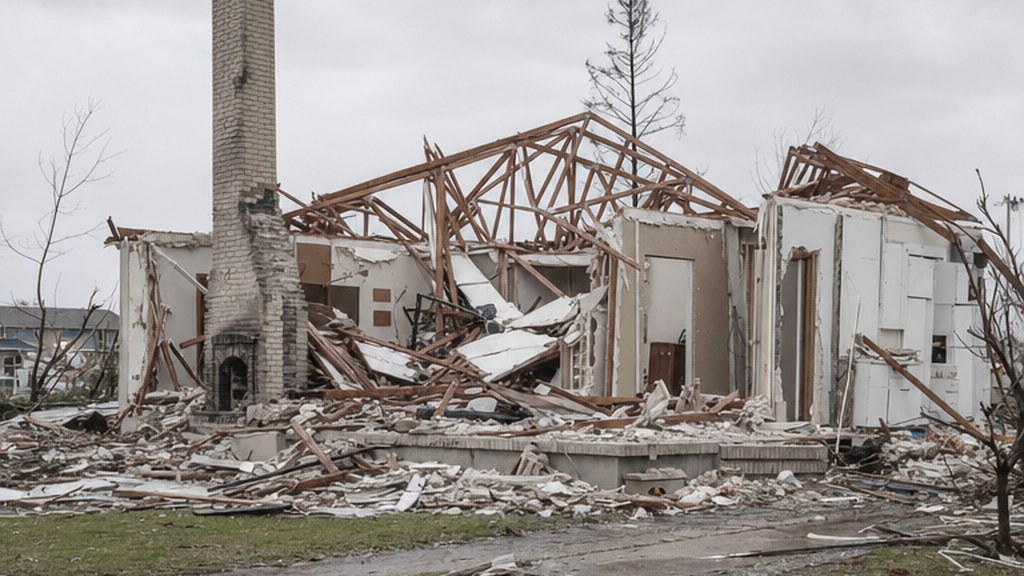
Actual total loss is the simple case. The structure is destroyed. A house burns to the foundation, a tornado removes it, a hurricane collapses it. Nothing recognizable as the insured building remains.
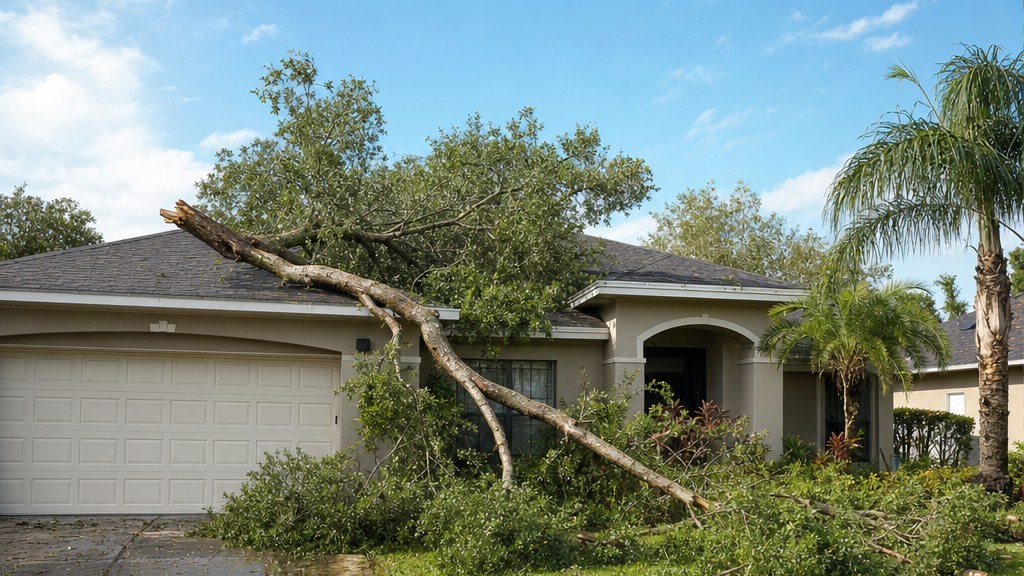
Constructive total loss is where the disputes live. The building is still standing, but it cannot sensibly be restored. This generally arises in four ways:
- Economic. The cost to repair meets or exceeds the value of the structure, or exceeds the policy limit. If the dwelling limit is $400,000 and a competent repair estimate comes in at $470,000, you are functionally at a total loss even though the walls are up.
- Structural integrity. Enough of the load-bearing system is compromised that remaining material cannot be safely reused. Foundation failure, extensive framing char, or racked structure after a wind event.
- Regulatory. The local building official condemns the property or applies a substantial-damage rule requiring the structure to be demolished and rebuilt to current code. In Florida's coastal flood zones this is a routine outcome, not an edge case.
- Identity. Some courts apply a test asking whether what remains still constitutes the insured building or has lost its identity as a structure. Standards differ by state.
The practical trigger is usually the first one, and it is decided by an estimate. That is why constructive total loss fights are really estimating fights: the insurer writes a repair scope that fits under the limit, the homeowner's contractor writes one that does not, and everything downstream depends on which is right.
This article is general information, not legal advice. Whether a particular loss is a total loss depends on your policy language, your state's law, and the facts of the loss.
What do valued policy laws require in Florida and South Carolina?
A valued policy law says that when a covered peril totally destroys a building, the insurer owes the face amount of the policy rather than a calculated repair or replacement figure. Roughly twenty states have some version. Florida and South Carolina both do, and they are not the same.
Florida. Under Fla. Stat. § 627.702, when a building, structure, mobile home, or manufactured building insured against a covered peril is totally destroyed, the insurer's liability is "the amount of money for which such property was so insured as specified in the policy and for which a premium has been charged and paid." Important limits apply:
- Mixed perils. Where a loss results from both covered and noncovered perils, the statute does not apply unless "the covered perils alone would have caused the total loss." This is the wind-versus-flood fight in a single sentence, and it is the reason hurricane total losses turn on causation evidence.
- Undisclosed additional insurance. It does not apply where more than one company insures the same building and the insured did not disclose the other coverage to all insurers.
- Blanket and builder's risk policies are carved out.
- Personal property is outside the statute, except for mobile homes and manufactured buildings. Your contents claim is still adjusted normally.
- Losses remain subject to any coinsurance clause in the policy.
South Carolina. S.C. Code Ann. § 38-75-20 provides that "in case of total loss by fire the insured is entitled to recover the full amount of insurance," and that "in case of a partial loss by fire the insured is entitled to recover the actual amount of the loss but in no event more than the amount of the insurance stated in the contract." The critical difference from Florida is the peril: the statute speaks to loss by fire. Where more than one policy covers the same property, the statute treats them as contributive insurance, with each insurer liable for its pro rata share.
How is a total loss paid out?
Payment on a total loss runs through the same four coverages as any other claim, but each behaves differently at the extreme.
| Coverage | How it behaves on a total loss |
|---|---|
| Dwelling | Valued policy law or the policy limit governs. In Florida, replacement cost is paid without any depreciation holdback |
| Other structures | Separate limit for detached garages, sheds, fences, docks; frequently underclaimed |
| Personal property | Adjusted item by item as usual, subject to sublimits; a whole-house inventory is a large undertaking |
| Loss of use / ALE | Runs for the full rebuild period, which on a total loss is typically the longest of any claim type |
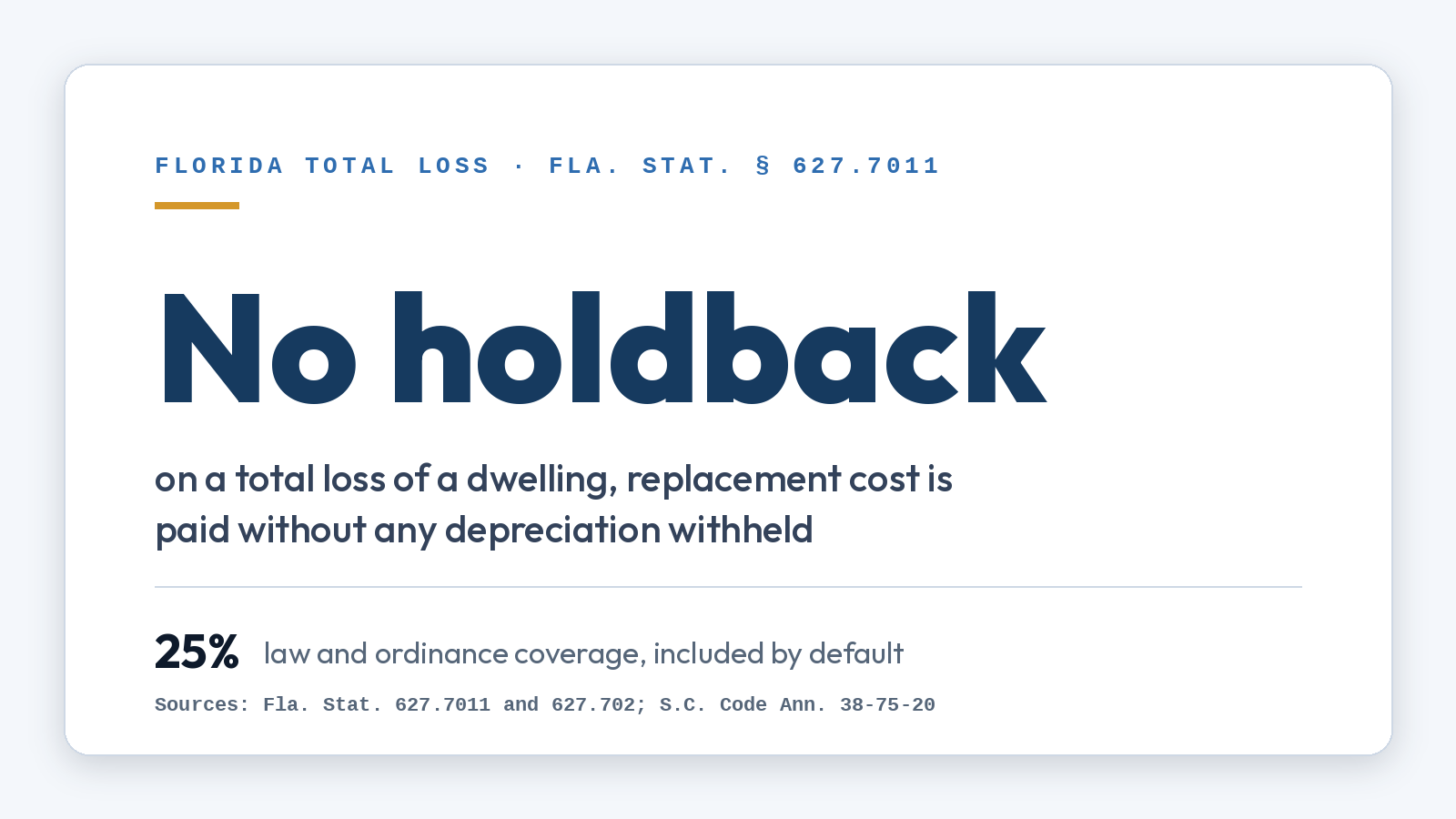
The depreciation point is worth isolating because it is unusually favorable to Florida policyholders. Ordinarily a replacement cost policy pays actual cash value first and releases the withheld balance only after repairs are complete, which is the mechanism we cover in our explainer on recoverable depreciation. But Fla. Stat. § 627.7011 provides that "if a total loss of a dwelling occurs, the insurer must pay the replacement cost coverage without reservation or holdback of any depreciation in value." No two-check process, no waiting for reconstruction to draw the rest.
The same statute is the reason to check your law and ordinance coverage. Florida insurers must offer replacement cost coverage that includes "costs necessary to meet applicable laws and ordinances," limited to 25 percent or 50 percent of the dwelling limit, and unless the policyholder refuses in writing, the policy automatically includes law and ordinance coverage limited to 25 percent of the dwelling limit. On a rebuild from bare ground, current code applies to everything: elevation requirements, wind mitigation, electrical, plumbing, energy. That 25 percent is not a luxury.
Pro Tip: On any suspected total loss, request the insurer's complete estimate file including the line-item repair estimate, not just the summary page. If the repair figure lands suspiciously just under your dwelling limit, that is the number to have independently reviewed.
Why do total loss claims fall short?
Coverage denial is not the usual failure mode on a total loss. Shortfall is.
Underinsurance. The dwelling limit reflects what it cost to rebuild whenever the number was last set, often years ago. Construction costs, labor, and code requirements have all moved. If the limit is $350,000 and rebuilding costs $520,000, valued policy law does not help; it pays what the policy says.
No extended or guaranteed replacement cost. Some policies include an extended replacement cost endorsement paying a percentage above the dwelling limit, commonly 25 to 50 percent. On a total loss this endorsement is worth more than everything else you can negotiate. Check whether you have it before you need it.
Law and ordinance shortfall. The 25 percent default in Florida covers a lot of rebuilds, but not all, particularly for older homes in coastal zones where elevation and structural upgrades stack.
Causation splits. Wind versus flood after a hurricane is the classic version, and Florida's valued policy law expressly does not apply to mixed-peril losses unless the covered peril alone would have caused the total loss. That single clause moves millions of dollars every storm season, and it is decided by engineering evidence gathered in the first weeks. Our hurricane damage claims page covers what that documentation looks like.
Contents fatigue. A total loss means an inventory of everything you owned. Homeowners routinely underclaim by five figures because the list stops.
ALE running out. Total loss rebuilds take a year or more. Policies commonly cap loss of use at 12 or 24 months or at a percentage of the dwelling limit, and a slow rebuild can outlast the coverage.
Mortgage escrow friction. Structure payments are typically issued to you and your lender jointly, and lenders often escrow the funds and release them in draws against inspected progress. This is normal, but it needs to be managed from week one or it becomes the thing delaying your rebuild.
What should you do in the first two weeks of a total loss?
The sequence that protects the claim:
- Secure the site and stop further loss. Fencing, tarping, utility shutoff. Keep the receipts.
- Document before anything is moved. Photograph and video the structure from every elevation and the interior wherever it is safe to enter. Once debris is cleared, that evidence is gone permanently.
- Get the official record. The fire report, the building official's damage assessment, any condemnation or substantial-damage determination. These documents carry weight.
- Report the claim and request the policy. Ask for a certified copy of the complete policy with all endorsements, not just the declarations page. Endorsements are where extended replacement cost, law and ordinance, and sublimits live.
- Start the ALE ledger immediately. Temporary housing, deposits, furniture rental, storage, pet boarding, mileage, laundry, and replacement of immediate necessities.
- Do not sign a release or accept a "final" figure early. Total loss files develop over months. Early closure is the most expensive mistake available.
- Begin the contents inventory while memory is fresh, working from old photos, videos, statements, and email receipts.
- Watch the clock. In Florida, for policies effective on or after December 16, 2022, Fla. Stat. § 627.70132 generally gives you 1 year from the date of loss to report and 18 months for a supplemental claim, and Fla. Stat. § 627.70131 requires the insurer to acknowledge within 7 days, inspect within 30 days of receiving your proof of loss, and pay or deny within 60 days of notice. In South Carolina, suits on a property policy generally fall under the 3-year limitation in S.C. Code Ann. § 15-3-530, while your policy's own notice and proof-of-loss deadlines are usually much shorter and control how quickly you must act.
Pro Tip: Ask your insurer in writing whether it is treating the claim as a total loss and, if not, for the repair estimate supporting that position. Getting the carrier's position on the record early prevents a year of ambiguity about which framework the claim is being adjusted under.
Key Takeaways
| Point | Details |
|---|---|
| Two kinds | Actual total loss (structure destroyed) and constructive total loss (economic, structural, regulatory, or identity grounds) |
| Florida valued policy law | § 627.702 requires payment of the insured amount on a total loss by a covered peril, with mixed-peril, blanket, builder's risk, and personal property exceptions |
| South Carolina | § 38-75-20 entitles the insured to the full amount of insurance on a total loss by fire; partial losses pay actual loss up to the stated amount |
| No holdback in Florida | On a total loss of a dwelling, replacement cost is paid "without reservation or holdback of any depreciation in value" (§ 627.7011) |
| Law and ordinance | Florida policies include it at 25 percent of the dwelling limit unless refused in writing; insurers must offer 25 or 50 percent options |
| The real risk | Underinsurance, missing extended replacement cost, causation splits, contents fatigue, and ALE expiring before the rebuild finishes |
What we see in the field
The hardest conversation in this business is telling someone that their dwelling limit is the ceiling and their rebuild does not fit under it. Valued policy law protects you from being paid less than your policy says. It does not protect you from a policy that says too little. The time to fix that is at renewal, when nobody is thinking about it, by asking your agent for a current replacement cost estimate and whether extended replacement cost is available on your form.
The second thing we see constantly is the just-under-the-limit repair estimate. A house with a compromised structure gets scoped as a very large repair that happens to land a few thousand dollars below the dwelling limit, which keeps the claim out of total loss treatment and out of valued policy law. Sometimes that estimate is defensible. Often it assumes framing can be cleaned and reused, that the foundation is sound, and that the rebuild will not trigger code upgrades. Those three assumptions carry most of the disputed money in constructive total loss claims, and each one is answerable with an engineer's report and a call to the building department.
Third, causation after a hurricane. When wind and water both hit a structure, the difference between a covered total loss and a flood claim capped at a separate policy's limit is decided by evidence collected in the first days: debris field direction, water lines, structural failure patterns, and neighboring properties. Nobody wants to think about evidence while standing in what used to be their living room, and that is exactly when it has to happen.
The last pattern is quieter. Files stall. A total loss claim involves the insurer, a mortgage lender holding the funds in escrow, a builder, a building department, and a family living somewhere else. Any one of them can pause the process, and months disappear while the ALE clock runs. Somebody has to own the schedule, and it should not be the person who just lost their house.
- The Vanguard field team
How Vanguard Claims Solutions helps
If your home has been destroyed or damaged badly enough that repair may not be realistic, we can review what your policy actually owes and press the claim on that basis. Vanguard Claims Solutions is a public adjusting firm licensed in Florida and South Carolina, led by Andrew Pichardo (FL Public Adjuster License #W493213, SC License #18873906). We handle the scope, the contents inventory, the living expense documentation, and the negotiation, including appraisal and mediation where the amount is disputed. We offer a free claim review and work with no upfront fees; the fee for your claim is set out in the written contingency agreement before you sign, and if there is no recovery, there is no fee. Call (305) 336-3302 or reach us through our contact page.
FAQ
Who decides whether my house is a total loss?
In practice the insurer's adjuster makes the initial call, based on a repair estimate compared against the policy limit and the structure's value. A building official's condemnation or substantial-damage determination carries significant weight, and in a dispute the question can go to appraisal if it is genuinely about the amount of loss, or to court if it turns on coverage.
Does a valued policy law mean I automatically get my full policy limit?
Only when its conditions are met. In Florida, § 627.702 applies when a covered peril totally destroys the building, and it expressly does not apply to mixed covered and noncovered perils unless the covered peril alone would have caused the total loss. In South Carolina, § 38-75-20 is written around total loss by fire. Contents are handled separately in both states.
Will my insurer withhold depreciation on a total loss?
In Florida, no, on the dwelling: § 627.7011 requires replacement cost coverage to be paid on a total loss of a dwelling "without reservation or holdback of any depreciation in value." Personal property is handled under the applicable personal property provision and may still be paid at actual cash value pending receipts.
What happens if my rebuild costs more than my policy limit?
You cover the difference unless you carry an extended or guaranteed replacement cost endorsement, or unless law and ordinance coverage absorbs the code-driven portion. This is why an accurate dwelling limit at renewal matters more than any negotiation after a loss.
Do I still get living expenses if the house is a total loss?
Yes, subject to your loss of use limit and any time cap. Total loss rebuilds are long, so track expenses from day one and monitor the limit as the rebuild progresses, because ALE running out mid-rebuild is a common and preventable problem.
Recommended
Dealing with this claim right now?
A licensed adjuster will review your loss and policy for free, with no obligation.