Cosmetic Damage vs Functional Damage: The Word That Kills Hail Claims
Two adjusters can stand on the same roof, look at the same dents, and write two different reports. One writes "hail damage, replace." The other writes "cosmetic." The difference between those two words is often the entire claim.
TL;DR:
- Cosmetic damage is physical damage that changes how something looks without impairing how it works. Industry endorsement language describes it as marring, scratching, denting, pitting, or discoloration that does not reduce the property's ability to keep out the elements to the same extent as before.
- Functional damage compromises performance: it shortens service life, breaks the weather barrier, or defeats the component's purpose. Functional damage is covered damage.
- A cosmetic damage exclusion is an endorsement added to a policy, usually to roof coverings and usually for wind and hail, that lets the insurer decline appearance-only damage. Regulators have approved such forms since at least the 1990s; Texas adopted endorsement HO-145, Exclusion of Cosmetic Damage to Roof Coverings Caused by Hail, as an early example.
- The exclusion is usually optional and premium-discounted, which means it is often on your policy because it lowered the quote, not because you chose it knowingly.
- "Cosmetic" is a conclusion, not an observation. It is contestable with better evidence, a second inspection, and where the policy allows, the appraisal process.
- Hail is not a small problem: wind and hail drive the largest share of homeowners claims in the country, averaging $13,511 per claim on 2018-2022 ISO data.
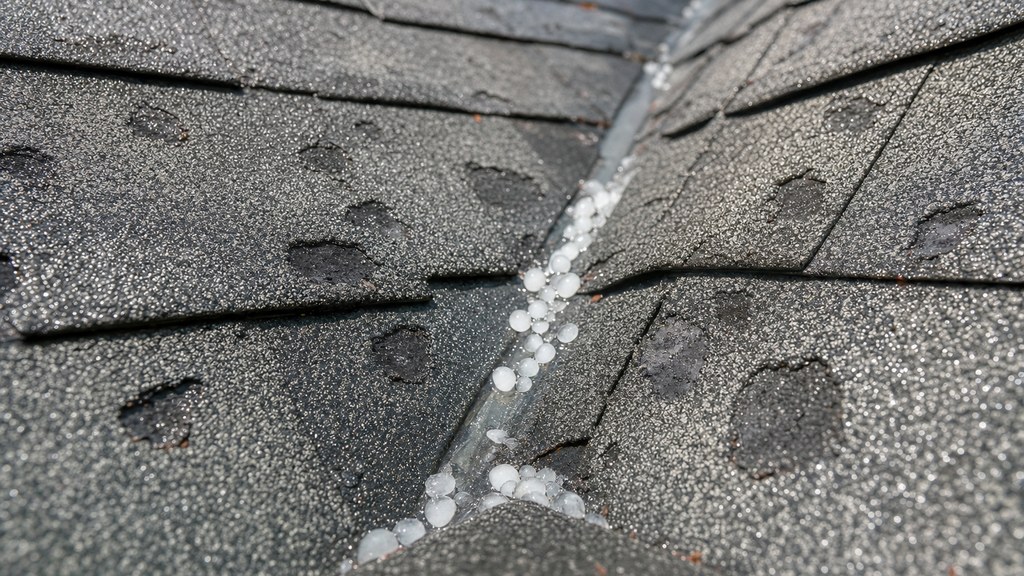
Hail claims are where this word does the most damage, and September through the end of storm season is when we see the most of them. The pattern is predictable. A storm passes, the roof takes hail, an adjuster inspects, and the report comes back describing dented gutters, spatter on the vents, and "cosmetic marring" on the shingle field. No structural impairment noted. Claim closed, or paid for a couple of soft-metal items and nothing else.
Sometimes that report is correct. Often it is a defensible-sounding conclusion that has not been tested. Knowing which one you are holding requires understanding where the industry actually draws the line.
What does cosmetic damage mean on an insurance claim?
Cosmetic damage is damage to appearance that does not impair function.
The most commonly cited industry definition comes from the American Association of Insurance Services endorsement language, which describes cosmetic damage as physical damage such as marring, scratching, denting, pitting, or discoloration, or another condition that affects the appearance of the property but does not impair its ability to keep out weather-related or other elements to the same extent it did before that damage occurred. Consumer-facing explanations, such as the overview at Insurance.com, describe the same idea in plainer terms: damage that affects the look of your home but not how it works.
Two things follow from that definition, and both cut in the policyholder's favor more often than homeowners realize.
First, the test is about performance, not severity. A dent is not automatically cosmetic because it is small, and a hole is not the only thing that qualifies as functional. The question the definition actually asks is whether the component still keeps the weather out as well as it did the day before the storm.
Second, the test is about the future as well as the present. A shingle whose mat is fractured and whose granule layer has been knocked loose is not leaking today. It will leak sooner than it should have, because the granules are the ultraviolet armor for the asphalt beneath them. Whether that counts as functional damage is exactly the fight, and it is a fight, not a settled fact.
Cosmetic damage versus functional damage: where the line sits
| Observation | Usually argued cosmetic | Usually argued functional |
|---|---|---|
| Asphalt shingle | Scuffing, isolated surface staining, blistering from manufacturing | Bruising with mat fracture, granule loss exposing asphalt, creased or torn tabs, loss of seal |
| Metal roof or panel | Denting on a standing seam field with no coating breach | Punctures, seam separation, fastener damage, coating breach leading to corrosion |
| Tile roof | Discoloration, surface marring | Cracked, chipped, or broken tiles, damaged underlayment, displaced tiles |
| Gutters and downspouts | Dents that do not affect flow | Dents that pond or divert water, separations, detached hangers |
| Vents, boots, flashing | Spatter marks | Split boots, dented and out-of-round vents, bent flashing that no longer sheds |
| Siding | Chalking, faint marring | Cracks, punctures, holes, breached moisture barrier |
| HVAC condenser | Light fin scuffing | Bent or flattened coil fins that reduce efficiency, damaged coil |
The middle rows are where most disputes live. Bent condenser fins and dented gutters are the classic examples of damage a carrier will call appearance-only when the affected component demonstrably does not do its job as well afterward.
Pro tip: the strongest counter to a cosmetic finding is almost never an argument. It is a specific, photographed, mapped observation: how many hits per test square, whether the mat is fractured under the bruise, whether granules are displaced to bare asphalt, whether the seal strip released. Opinions lose to test squares.
Is there actually a cosmetic damage exclusion on my policy?
There may be, and finding out takes about five minutes.
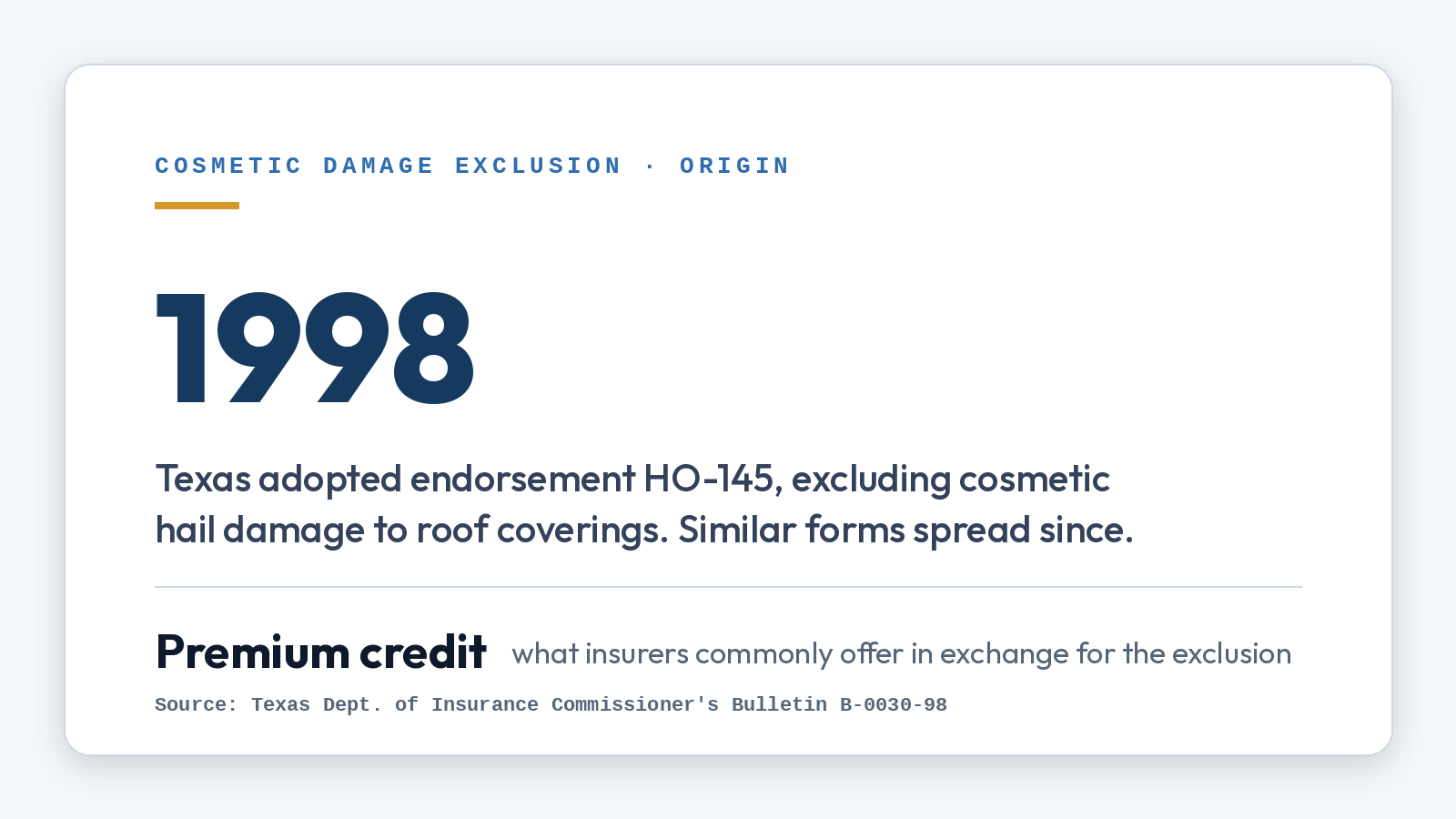
A cosmetic damage exclusion is not part of the base homeowners form. It is an endorsement, a separate form number attached to your policy that modifies coverage. Regulators have been approving these forms for decades; Texas adopted HO-145, "Exclusion of Cosmetic Damage to Roof Coverings Caused by Hail", for attachment to its homeowners forms back in 1998, and similar endorsements have spread through hail-exposed states since.
How to check:
- Open your declarations page and find the list of forms and endorsements. It is usually a column of form numbers and short titles.
- Look for anything with "cosmetic," "roof surfacing," "roof covering," "appearance," or "marring" in the title.
- Pull that form out of your policy packet and read the definition it uses, because the wording varies by carrier and the wording is what controls. Some apply only to hail. Some apply to wind and hail. Some apply only to metal roofs. Some apply to the entire roof covering.
- Note whether the endorsement came with a premium credit. Insurers frequently discount the wind and hail portion of the premium in exchange for it. If a quote came in unexpectedly low a few renewals ago, this is one of the reasons why.
If the endorsement is not on your policy, an adjuster's use of the word "cosmetic" is not an exclusion at all. It is an opinion about whether the damage is covered damage, and it is subject to the ordinary burden of the policy.
That distinction is worth saying twice. Without a cosmetic exclusion endorsement, "cosmetic" is not a coverage term. It is a characterization.
Why cosmetic findings happen so often on hail claims
Four practical reasons, none of them conspiratorial.
- Hail damage genuinely is hard to see. Bruising on a weathered shingle does not photograph well from a ladder in flat midday light. It shows in raking light, early or late, and it shows to a hand.
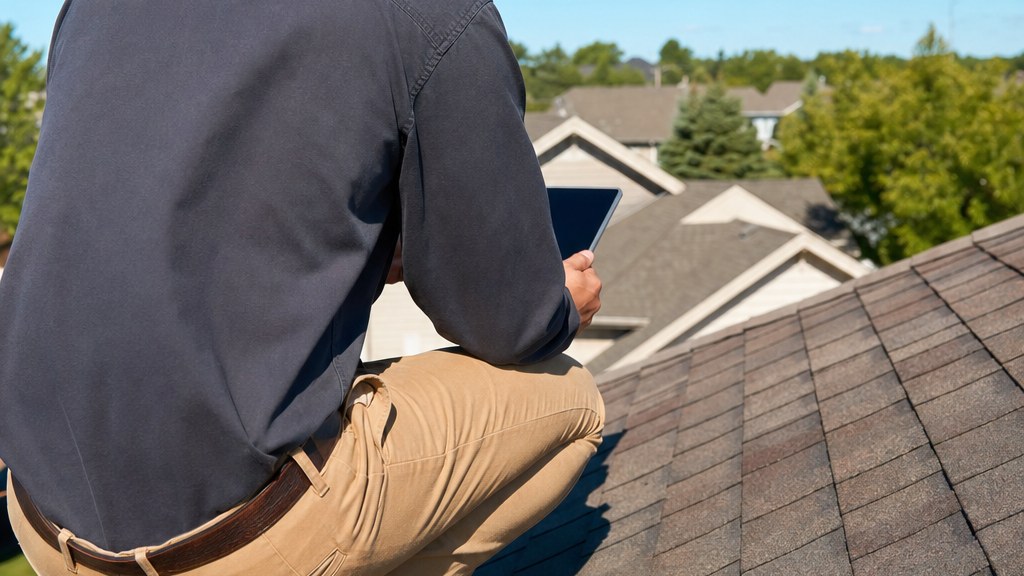
- A short inspection covers a small sample. A proper hail inspection chalks test squares on every slope and counts hits per square. A quick inspection walks one slope and photographs a gutter.
- Age and wear look similar to a layperson and sometimes to a hurried professional. Granule loss from ten years of sun and granule loss from a hailstone are distinguishable, but the distinction requires looking at the mat.
- The word does a lot of work. "Cosmetic" is a clean, professional-sounding conclusion that closes a file. It is also unfalsifiable unless somebody produces contrary evidence.
What to do when your claim comes back "cosmetic"
A cosmetic finding is a position, and positions can be answered.
- Get the report and the photographs. Request the adjuster's full report, the estimate, and the photo set. You are entitled to understand the basis of the decision on your own claim.
- Read the actual conclusion. Is the carrier invoking a named endorsement, with a form number, or is the adjuster simply describing the damage as cosmetic? These call for different responses.
- Do not repair yet. Repairing before the dispute is documented destroys the evidence. Mitigate to stop active water, photograph everything, and keep receipts.
- Get an independent inspection with test squares. A proper hail inspection maps hits by slope, documents mat fracture under bruising, checks soft metals for directional spatter as corroboration of the storm, and ties the findings to storm date and hail size data for your address.
- Corroborate with weather data. Reported hail size and storm timing for your location support that hail of a damaging size actually fell there, which forecloses the "this is just wear" version of the argument.
- Ask about manufacturer position and repairability. If a shingle cannot be repaired without breaking adjacent shingles, or the product line is discontinued so a slope cannot be matched, that changes the scope conversation from repair to replacement.
- Consider the appraisal clause. Most policies contain one, and it is designed for disputes about the amount of loss. Our guide to the insurance appraisal process explains when it fits and when it does not, and the important caveat: appraisal resolves amount, not coverage, so a true exclusion dispute may not belong there.
Pro tip: if the carrier is relying on a cosmetic exclusion endorsement, the argument shifts from "is there damage" to "is this damage within the exclusion's own definition." Almost every version of the wording carves out damage that impairs the ability to keep out the elements. Proving impairment is proving coverage.
What we see in the field
Three recurring things.
The first is that the cosmetic finding frequently arrives after an inspection where nobody chalked a test square. When we go back up with a proper method, on the same slopes, we regularly document functional hail damage that the original inspection did not record. The conclusion was not necessarily wrong on purpose. It was reached on a thin sample.
The second is soft metals. Homeowners see the dented gutters and the spattered vents as the annoying part of the claim. To an inspector, those are the corroborating evidence: directional spatter on soft metals establishes that hail of a given size struck the property from a given direction, and that makes the shingle field findings much harder to write off as wear.
The third is the endorsement nobody knew about. We meet homeowners who are certain their claim is being handled wrongly, and the exclusion is right there in the forms list on the declarations page, attached three renewals ago with a premium credit nobody mentioned. That is a coverage conversation rather than a damage conversation, and it is far better to have it before the next storm than after.
How Vanguard Claims Solutions helps
We are licensed public adjusters. We represent policyholders and never insurers, and hail claims are one of the places where an independent, properly documented inspection changes outcomes most.
On a cosmetic dispute we inspect the roof and the full envelope, chalk and map test squares slope by slope, document mat fracture and granule displacement rather than just photographing dents, corroborate with soft-metal evidence and storm data, read your declarations page to establish whether a cosmetic endorsement is actually on the policy, and write a scope that reflects the full covered loss. Where the disagreement is about the amount rather than coverage, we can pursue the appraisal process.
The inspection is free and there are no upfront fees. No recovery, no fee. The fee for your claim is set out in the written contingency agreement before you sign anything.
Andrew Pichardo · FL Public Adjuster Lic. #W493213 · SC Public Adjuster License #18873906
Call (305) 336-3302 or request a free claim review.
Key takeaways
| Question | Short answer |
|---|---|
| What is cosmetic damage? | Damage to appearance that does not impair how the component performs |
| What makes damage functional? | It shortens service life, breaches the weather barrier, or defeats the component's purpose |
| Is cosmetic damage always excluded? | No. Only if a cosmetic damage endorsement is attached to your policy |
| How do I know if I have one? | Check the forms and endorsements list on your declarations page for "cosmetic" or "roof covering" |
| Why is the endorsement on my policy? | It usually carries a premium credit on the wind and hail portion |
| Is a "cosmetic" finding final? | No. It is a conclusion, answerable with test squares, mat evidence, and storm data |
| What should I not do? | Do not repair before the dispute is documented |
FAQ
What does "cosmetically damaged" mean on an insurance claim?
It means the insurer's position is that the damage changes how the property looks without reducing how well it performs. Endorsement language typically describes marring, scratching, denting, pitting, or discoloration that does not impair the property's ability to keep out weather-related elements to the same extent as before the damage. If the damage does impair that ability, it is functional damage and it is not cosmetic.
Is hail damage to a roof covered if it is only cosmetic?
It depends on whether your policy carries a cosmetic damage exclusion endorsement. Without one, the question is simply whether hail caused covered damage, and appearance-only damage to a covered structure is generally payable. With one, appearance-only damage to the roof covering can be declined, but damage that impairs the roof's ability to keep out the elements falls outside almost every version of that exclusion.
Can I dispute an adjuster's finding that my damage is cosmetic?
Yes. Request the report and photographs, get an independent inspection that maps test squares by slope and documents mat fracture and granule displacement, corroborate with soft-metal spatter and storm data, and submit the findings in writing. If the disagreement is about the amount of loss rather than about coverage, the policy's appraisal clause may apply.
Are dented gutters and bent AC fins cosmetic?
They are the most commonly disputed items on a hail claim. Dents that cause water to pond or divert, separations, and detached hangers affect function. Bent or flattened condenser fins reduce airflow and efficiency. Soft-metal damage is also valuable evidence in its own right because directional spatter helps establish hail size and impact direction across the property.
Does a cosmetic damage exclusion lower my premium?
Usually. Insurers commonly offer a credit on the wind and hail portion of the premium in exchange for the reduced coverage. That is why the endorsement often appears on a policy quietly: it made the quote more competitive. Whether the trade is worth it is a decision to make at renewal, not after a storm.
Recommended reading
Dealing with this claim right now?
A licensed adjuster will review your loss and policy for free, with no obligation.