Storm Damage Claims: What's Covered After Wind and Hail
The storm takes about twenty minutes. The claim takes months, and it is decided almost entirely by what you can prove about those twenty minutes.
TL;DR:
- Wind and hail are covered perils on standard homeowners policies. Rising water and storm surge are not, and need separate flood coverage through the National Flood Insurance Program or a private carrier.
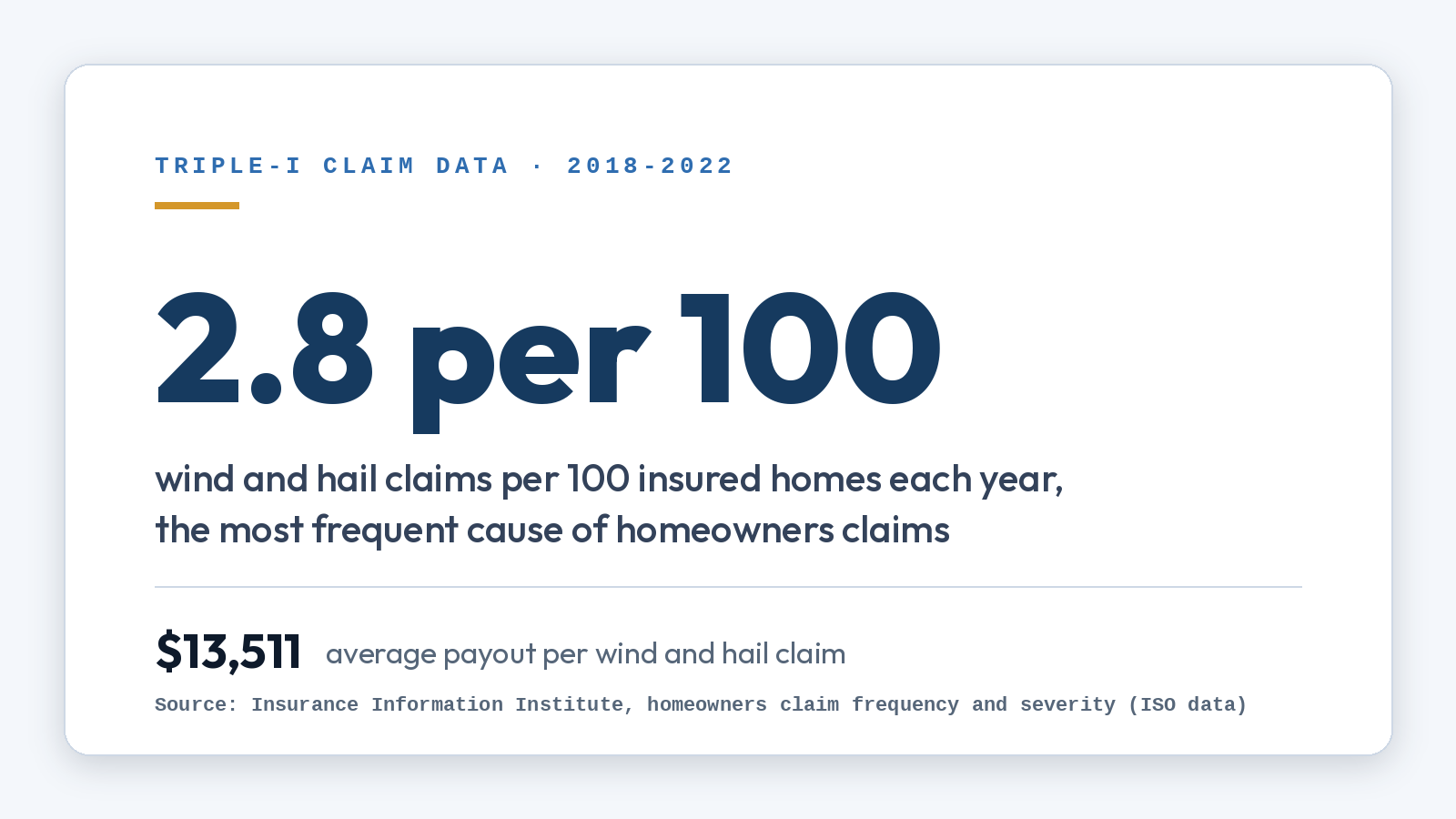
- Wind and hail cause the largest share of homeowners claims in the country: 2.8 claims per 100 house-years at an average of $13,511 per claim on 2018-2022 ISO data.
- A hurricane loss usually triggers a separate percentage deductible instead of your flat one. Florida insurers must offer hurricane deductibles of $500, 2%, 5%, and 10% of dwelling limits under Fla. Stat. § 627.701, applied on an annual basis.
- The two arguments that decide most storm claims are causation (storm damage versus wear and tear) and hail severity (functional damage versus cosmetic).
- Peak Atlantic activity is right now: NOAA's National Hurricane Center puts the climatological peak at September 10, with most activity between mid-August and mid-October.
A storm damage claim is a first-party property insurance claim for damage caused by wind, hail, lightning, wind-driven rain, or objects the storm threw at your building. On a standard homeowners policy those perils are covered. The dispute is almost never about whether wind is covered. It is about how much of what you are pointing at the wind actually did, what it costs to repair correctly, and which deductible applies to the number.
That is a narrower fight than most homeowners expect, and it is winnable, but only with documentation. Storms are unusual among insured losses in that the evidence degrades fast. Water dries, debris gets hauled away, tarps go up, and the roof you photograph in November is not the roof the wind hit in September. The highest-value hour in a storm claim is the one you spend with a camera before anyone touches anything.
What counts as storm damage on a homeowners policy?
Most homeowners policies in the United States are built on ISO forms, and on the widely used HO-3 form published by Triple-I, the dwelling is covered on an open-perils basis: everything is covered except what the policy excludes. Personal property is covered on a named-perils basis, and "windstorm or hail" is one of those named perils. In practice, a storm claim usually involves some combination of the following:
- Wind damage to the roof. Lifted, creased, torn, or missing shingles; displaced tiles; ridge cap loss; loosened flashing; damaged vents, boots, and drip edge. The most common storm claim and the most disputed one. Our roof damage claims page goes deeper.
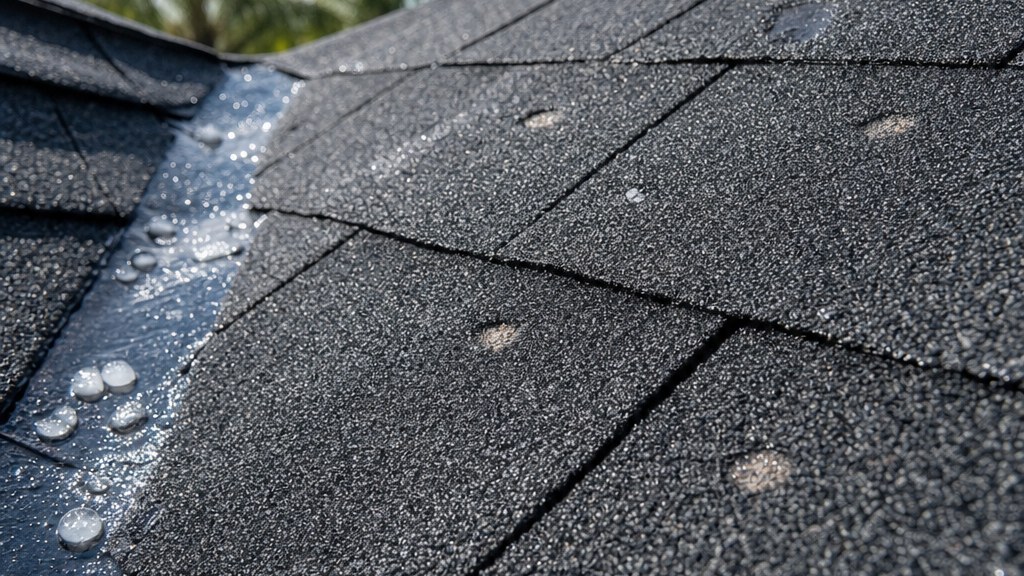
- Hail damage. Bruising and fracture of shingle mats, spatter marks on soft metals, dented gutters, damaged vents and HVAC condenser fins, cracked tile, and broken skylights.
- Wind-driven rain intrusion. Water that enters through an opening the wind created.
- Fallen trees and windborne debris. Trees, limbs, fence sections, and anything else the wind carried into your building.
- Envelope damage. Siding, soffit, fascia, gutters, windows, doors, garage doors, screen enclosures, docks, and detached structures.
- Consequential interior damage. Ceilings, drywall, insulation, flooring, and contents ruined once the envelope was breached, plus the mold that follows if drying is delayed. See our water damage and mold damage pages.
Wind-driven rain versus flood: the distinction that decides the claim
This is the most consequential line in a storm claim, and it turns on where the water came from, not on how wet you got.
Wind-driven rain is rain that enters the building through an opening created by the wind: a hole in the roof, a broken window, a failed door. Standard homeowners policies cover it. Florida's own statutory definition of hurricane coverage in Fla. Stat. § 627.4025 tracks this logic, describing coverage for windstorm damage during a hurricane including subsequent interior damage from rain, hail, sand, or dust if the wind first creates an opening in the building.
Flood is water rising from outside: storm surge, overflowing rivers and canals, and surface water that ponds and enters the structure. It is excluded from homeowners policies everywhere and requires a separate flood policy, which typically carries a 30-day waiting period. That makes flood insurance a decision for a quiet week rather than for the day a cone appears.
After a coastal storm this is exactly where the fight happens, because a house can be hit by both at once. The homeowners insurer's position is often that the interior damage came from surge, the flood carrier's is often that it came from wind, and the homeowner is caught between two files that point at each other. What breaks the deadlock is evidence: high-water marks, debris lines, the direction of staining, the sequence of photographs, and where the water damage sits relative to the roof breach. Our hurricane damage claims page covers named-storm losses, and our post on whether homeowners insurance covers water damage walks through the water side.
How does a hurricane deductible differ from a regular deductible?
Most homeowners have one number in their head: the flat all-other-perils deductible on the declarations page, often $1,000 or $2,500. Storm-exposed policies carry a second one, and it is usually much larger. If a named storm caused your loss, the deductible is only the first of several rules that change; our hurricane damage claim page covers the full named-storm process.
A hurricane or named-storm deductible is a percentage of your dwelling coverage limit rather than a flat dollar amount, and it replaces the flat deductible for losses caused by a qualifying storm. In Florida, Fla. Stat. § 627.701 requires insurers to offer alternative hurricane deductibles equal to $500, 2 percent, 5 percent, and 10 percent of policy dwelling limits before issuing a personal lines residential property policy, with exceptions for higher limits, and provides that the hurricane deductible applies on an annual basis to covered hurricane losses occurring during the calendar year rather than resetting for each storm.
The arithmetic matters more than the percentage does.
| Dwelling limit | 2% hurricane deductible | 5% hurricane deductible | 10% hurricane deductible |
|---|---|---|---|
| $250,000 | $5,000 | $12,500 | $25,000 |
| $400,000 | $8,000 | $20,000 | $40,000 |
| $600,000 | $12,000 | $30,000 | $60,000 |
| $850,000 | $17,000 | $42,500 | $85,000 |
Three things follow from that table.
The deductible is applied to the dwelling limit, not to the loss. A 5 percent deductible on a $400,000 dwelling limit is $20,000 whether the damage is $22,000 or $220,000. Homeowners routinely assume it is a percentage of the claim.
Whether it applies at all depends on the storm's classification, not on how bad the weather felt. In Florida the hurricane occurrence period is statutory: § 627.4025 provides that it begins when the National Hurricane Center issues a hurricane warning for any part of Florida and ends 72 hours after the termination of the last hurricane watch or warning for any part of the state. Damage from a severe thunderstorm, or a tropical storm that never triggered a hurricane warning, is an all-other-perils loss with your flat deductible. Confirm which one the carrier applied.
It interacts badly with a tight scope. If the estimate is written narrowly, a percentage deductible can wipe out the entire payment even on a claim with real damage. The homeowner hears "your damage does not exceed your deductible," concludes there is nothing to be done, and never has the scope reviewed.
Pro Tip: Pull your declarations page today, before there is a claim, and write down four numbers: your dwelling limit, your all-other-perils deductible, your hurricane or named-storm deductible as a percentage and as the dollar figure it works out to, and whether you have separate flood coverage. Nobody reads that page calmly for the first time three days after a storm.
How does the storm damage claim process work, step by step?
The sequence is fairly consistent across carriers. Knowing what is coming next is how you stay ahead of the file instead of reacting to it.
| Stage | What happens | What decides the outcome |
|---|---|---|
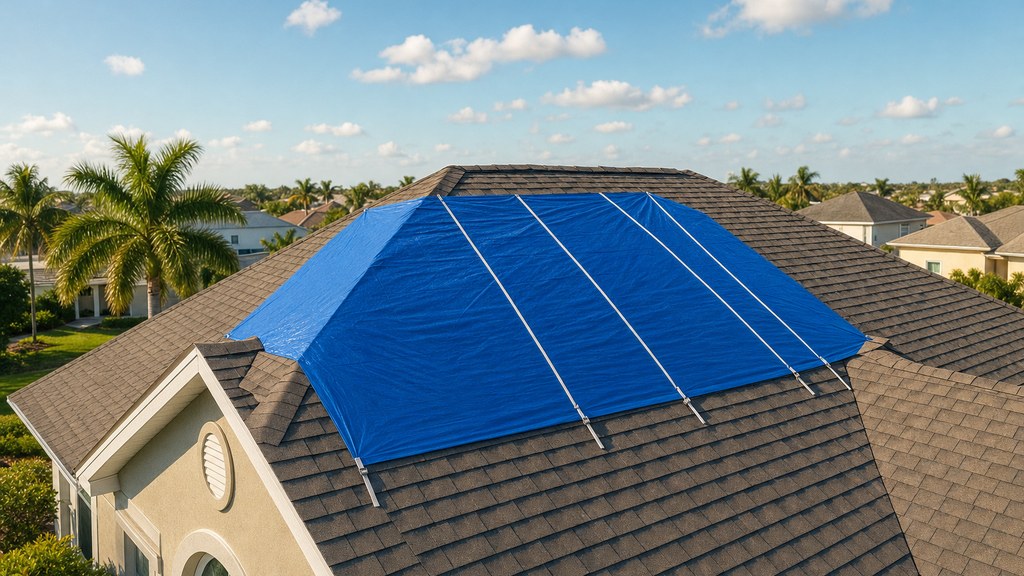
| Safety and emergency work | Make the property safe, tarp and board up, stop further damage | Photographs and video taken before any work starts |
| Report the loss | Notify the insurer, get a claim number and adjuster assignment | Reporting promptly, in writing, with the date of loss stated |
| Mitigation | Water extraction, drying, temporary repairs | Receipts, drying logs, moisture readings, before-and-after photos |
| Field inspection | The insurer's adjuster inspects and scopes the loss | Your own documentation being ready at that inspection |
| Estimate | The carrier writes a line-item estimate in estimating software | Whether every damaged component appears as a line item |
| Decision and payment | Acceptance, partial payment, or denial; deductible and depreciation applied | Which deductible was applied, and how depreciation was calculated |
| Repairs and supplement | Contractors work, hidden damage surfaces, omitted scope is claimed | Documenting concealed damage the moment it is exposed, within deadline |
The first payment on a storm claim is usually not the final one. On a replacement cost policy the insurer typically pays actual cash value first and releases the withheld depreciation after repairs are completed and documented. A check that looks small is sometimes a correct first installment and sometimes a genuine underpayment, and they look identical on the stub, so read our explainer on recoverable depreciation before you evaluate any settlement figure. Where hidden or omitted damage shows up later the remedy is a supplemental claim, and where the insurer requires a sworn statement of your claimed amounts, read our guide on what a proof of loss is before signing.
What should you document after a storm?
Everything, immediately, and more than feels necessary. Storm claims are decided on the record that exists, and the record closes faster than people expect.
- Photograph and video before you touch anything. Wide shots of the whole elevation, then medium shots, then close-ups with something for scale, inside and out. Timestamped photos with intact metadata are far harder to argue with.
- Record the storm itself. Save the National Weather Service warnings and storm reports for your address and date, including peak gusts and hail reports. Carriers pull weather data as a matter of routine, and you should have the same record.
- Keep every receipt. Tarps, plywood, fuel, generators, board-up crews, water extraction, hotel nights, and debris removal. Reasonable emergency expenses are usually reimbursable, and protecting the property from further damage is a policy condition you must meet anyway.
- Do not discard damaged material until it is documented, and log every contact with the insurer, confirming important conversations in writing.
- Get your own line-item estimate. An independent estimate written to the same standard as the carrier's is what makes a gap arguable line by line.
Pro Tip: Take a full photo tour of your undamaged property once a year, exterior elevations, roof, interiors, and contents, and store it in the cloud. The most powerful evidence in a storm claim is a clear picture of what the property looked like the week before the storm, and after the storm it is too late to create it.
Why do storm damage claims get underpaid or denied?
Wind and hail generate more homeowners claims than any other cause. On the 2018-2022 ISO data compiled by Triple-I, wind and hail ran 2.82 claims per 100 house-years at an average severity of $13,511, ahead of water damage and freezing at 1.61 and $13,954. High volume plus damage that is hard to scope from the ground produces predictable dispute patterns.
Wear and tear instead of storm causation. The most common reason a roof claim gets reduced or denied. The carrier's position is that the shingles were aged, brittle, previously damaged, or improperly installed, and that the storm did not cause the condition claimed. Sometimes that is accurate. Often it is a conclusion reached from a short inspection with no test square, no measurements, and no weather data. Wind damage has recognizable signatures: creasing at the fold line, unsealed tabs in a directional pattern, missing shingles concentrated on the windward slope. Age alone is not a defense to a covered wind loss.
Cosmetic versus functional hail damage. Hail arguments turn on whether the impact merely marked the surface or actually shortened the life of the component. A dent in a metal panel that does not affect performance is a different question from a bruise that fractured the mat of an asphalt shingle and released the granules protecting it. Some policies now carry explicit cosmetic damage exclusions for roof surfacing, so read your form. Where no such exclusion exists, "it is only cosmetic" is an opinion that has to be supported, not an automatic outcome.
Repair specified where replacement is required. Spot repairs to a roof with widespread damage, or patched siding on a discontinued profile. This is where matching law matters, and it is state-specific. See the Florida and South Carolina sections below.
Scope written too tight. The estimate covers the visible shingles but not the underlayment, the decking, the drip edge, the flashing, the ridge vent, the code-required components, the gutters, the screens, the interior ceiling, or the detached structures. Nothing is denied. It is simply not in the document. Combine that with a percentage hurricane deductible and the result is a zero-dollar claim on real damage.
Late reporting and evidence loss. Storm damage that goes unnoticed until a ceiling stain appears months later is harder to tie to a specific date of loss, and in Florida it may run into a reporting deadline.
Depreciation never recovered. Withheld depreciation on a replacement cost policy is only released when the homeowner completes the repairs and submits the documentation. A meaningful amount of storm money is simply never claimed.
If your claim has already been denied, our denied claims page explains what options remain, and where coverage is accepted but the amount is disputed, the appraisal clause may be the fastest route to a number.
What Florida homeowners should know about roof storm claims
Two Florida rules come up in nearly every roof claim in the state.
The 25 percent roof rule. Florida's building code has historically required that when 25 percent or more of a roof section is repaired, replaced, or recovered within a 12-month period, that section be brought up to current code. A 2022 law added an important exception: under Fla. Stat. § 553.844, where an existing roofing system or roof section was built, repaired, or replaced in compliance with the 2007 Florida Building Code or later, only the repaired, replaced, or recovered portion must be constructed to the code in effect. Which side of that line your roof falls on can change a claim by tens of thousands of dollars, and it depends on your roof, its history, and your policy.
Matching. Under Fla. Stat. § 626.9744, when a loss requires replacement of items and the replaced items do not match in quality, color, or size, the insurer must make reasonable repairs or replacement of items in adjoining areas, weighing factors the statute lists including replacement cost, achievable uniformity, and remaining useful life. This is the statute behind arguments about half a roof or one wall of siding.
Florida also runs on short clocks. For policies effective on or after December 16, 2022, Fla. Stat. § 627.70132 generally gives you one year from the date of loss to report a new claim and 18 months for a supplemental claim, and older policies may allow longer. On the insurer's side, Fla. Stat. § 627.70131 requires acknowledgment of claim communications within 7 days, inspection within 30 days of receiving a proof of loss, and payment or denial within 60 days of notice. Our Florida claim deadlines guide lays out the full timeline.
What South Carolina homeowners should know about storm claims
In South Carolina, what your policy owes on a storm-damaged roof or a partial repair is governed by the policy's own terms, including whether coverage is written on an actual cash value or replacement cost basis. South Carolina has no statutory 25 percent roof rule and no statutory matching requirement, so the arguments about roof code upgrades and uniform appearance are made from the policy language and the facts of the loss rather than from a statute.
On timing, you generally have three years to file suit on a property insurance policy under S.C. Code Ann. § 15-3-530, but your policy's own notice and proof-of-loss deadlines are usually much shorter and control how quickly you must act, so report and document early. Public adjusters in South Carolina are licensed and regulated by the South Carolina Department of Insurance under the state's public adjuster law, S.C. Code Ann. Title 38, Chapter 92, which requires a written contract before any work begins and gives you five business days to cancel it. If you disagree with the denial, amount, or handling of a claim, the SCDOI Office of Consumer Services takes consumer complaints. Our South Carolina property insurance claims guide covers the landscape there in full.
These two sections are general information, not legal advice. What applies to your claim depends on your policy language, your state's law, and the facts of your loss.
Key Takeaways
| Point | Details |
|---|---|
| What is covered | Wind, hail, lightning, windborne debris, fallen trees, and wind-driven rain entering through a storm-created opening |
| What is not | Rising water, storm surge, and surface flooding, which require separate flood insurance with a typical 30-day waiting period |
| Deductibles | A hurricane or named-storm loss triggers a percentage-of-dwelling-limit deductible; Florida insurers must offer $500, 2%, 5%, and 10% options, applied on an annual basis (Fla. Stat. § 627.701) |
| The core disputes | Storm causation versus wear and tear, and functional versus cosmetic hail damage |
| Documentation | Photograph before any work, save weather records, keep every receipt, and get your own line-item estimate |
| Florida specifics | The 25% roof rule and its 2007-code exception (§ 553.844), matching (§ 626.9744), 1 year to report and 18 months to supplement (§ 627.70132) |
| South Carolina specifics | Policy terms control roof and repair scope; 3-year suit limitation (§ 15-3-530) with shorter policy deadlines controlling |
What we see in the field
The pattern we see most on storm files is a claim that was decided in twenty minutes on a roof and then defended for six months on paper. An inspection happens, a small number of test areas get looked at, a conclusion forms, and everything after that is the carrier's estimate being explained rather than reexamined. The homeowners who do best are the ones who had their own documentation in hand at that inspection instead of hoping to reopen the question afterward.
The second pattern is the deductible conversation. A family hears that their damage does not exceed their hurricane deductible, and because the number is five figures, that sounds plausible enough to end the discussion. What is rarely examined is the scope that produced it. When an estimate omits the underlayment, the decking, the code-required components, the interior, and the detached structures, it is not surprising that the total lands under a percentage deductible. The deductible is not the problem in those files. The document is.
Third is the wear-and-tear finding on an older roof. Roofs in Florida and coastal South Carolina age hard, and a fifteen-year-old roof genuinely has age-related condition on it. That is not the same as saying a storm did nothing. The question a claim has to answer is what changed on a specific date, and answering it takes directional evidence, gust data, and a real inspection rather than an adjective.
The through line is timing. Storm claims reward speed at the front and patience at the back, and homeowners who rush the first week and then rush the settlement give away both ends.
- The Vanguard field team
How Vanguard Claims Solutions helps
If a storm damaged your property and the estimate does not look like it covers what actually happened, we can review it. Vanguard Claims Solutions is a public adjusting firm licensed in Florida and South Carolina, led by Andrew Pichardo (FL Public Adjuster License #W493213, SC License #18873906). We inspect and scope the loss independently, document the causation, verify which deductible applies and how it was calculated, and negotiate the claim on your behalf. For named-storm losses, start with our hurricane damage claims page. We offer a free claim review and work with no upfront fees; the fee for your claim is set out in the written contingency agreement before you sign, and if there is no recovery, there is no fee. Call (305) 336-3302 or reach us through our contact page.
FAQ
Does homeowners insurance cover wind and hail damage?
Yes. Windstorm and hail are covered perils on standard homeowners policies, and on the common HO-3 form the dwelling itself is covered on an open-perils basis. Some policies in high-wind regions carry separate wind or named-storm deductibles, and some carry cosmetic damage exclusions for roof surfacing, so check your own form and declarations page.
Is roof damage from a storm covered by insurance?
Generally yes, when a covered storm caused the damage. The dispute is usually about causation rather than coverage: insurers commonly attribute roof conditions to age, wear, prior damage, or installation defects. Directional damage patterns, creased and unsealed shingles, and local wind and hail records are what tie the condition to a date of loss. Our roof damage claims page covers this in detail.
What is a wind and hail deductible?
A deductible that applies specifically to wind, hail, hurricane, or named-storm losses, usually expressed as a percentage of your dwelling coverage limit rather than a flat dollar amount. In Florida, insurers must offer hurricane deductibles of $500, 2 percent, 5 percent, and 10 percent of dwelling limits under Fla. Stat. § 627.701, applied on an annual basis to covered hurricane losses during the calendar year.
Does insurance cover a tree falling on my house?
Damage to your dwelling and other structures from a fallen tree is generally covered on a standard homeowners policy, including reasonable removal of the tree from the structure, though policies typically limit debris removal for a tree that fell without damaging anything.
How long do I have to file a storm damage claim?
It depends on your state and your policy. In Florida, for policies effective on or after December 16, 2022, you generally have one year from the date of loss to report a new claim and 18 months for a supplemental claim under Fla. Stat. § 627.70132. In South Carolina, the suit limitation for a property policy is generally three years under S.C. Code Ann. § 15-3-530, but your policy's own notice and proof-of-loss deadlines are shorter and control how fast you must act. Report early either way, because storm evidence disappears long before any deadline does.
Recommended
Dealing with this claim right now?
A licensed adjuster will review your loss and policy for free, with no obligation.