What Is the FEMA 50 Percent Rule? Substantial Damage, Explained for Homeowners
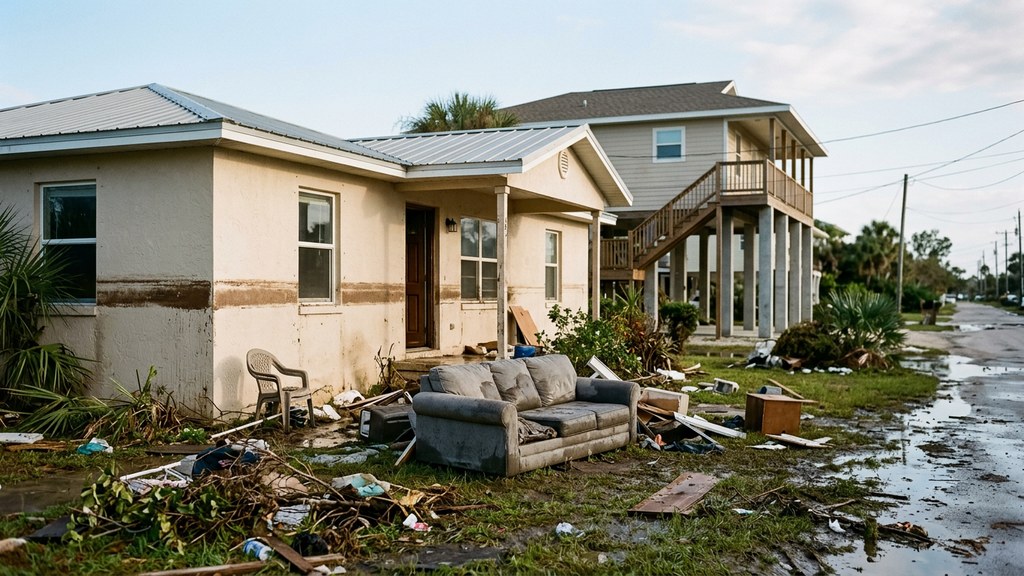
The insurance adjuster leaves. The contractor's estimate comes in. Then a letter arrives from the county building department, and it uses two words nobody had mentioned until now: substantial damage. Suddenly the question is not what the repairs cost. It is whether you are allowed to make them at all without lifting the house.
TL;DR:
- The FEMA 50 percent rule comes from the National Flood Insurance Program's floodplain regulations at 44 CFR § 59.1. A building in a Special Flood Hazard Area is substantially damaged when the cost to restore it to its pre-damage condition equals or exceeds 50 percent of its market value before the damage. The same threshold defines substantial improvement for renovations and additions.
- When a building crosses the line, the local community's floodplain ordinance requires it to be brought into compliance with current flood standards, which for most homes means elevating the structure, relocating it, or demolishing and rebuilding.
- Your local floodplain administrator makes the determination when you apply for a building permit. Not FEMA, not your insurer, not your contractor.
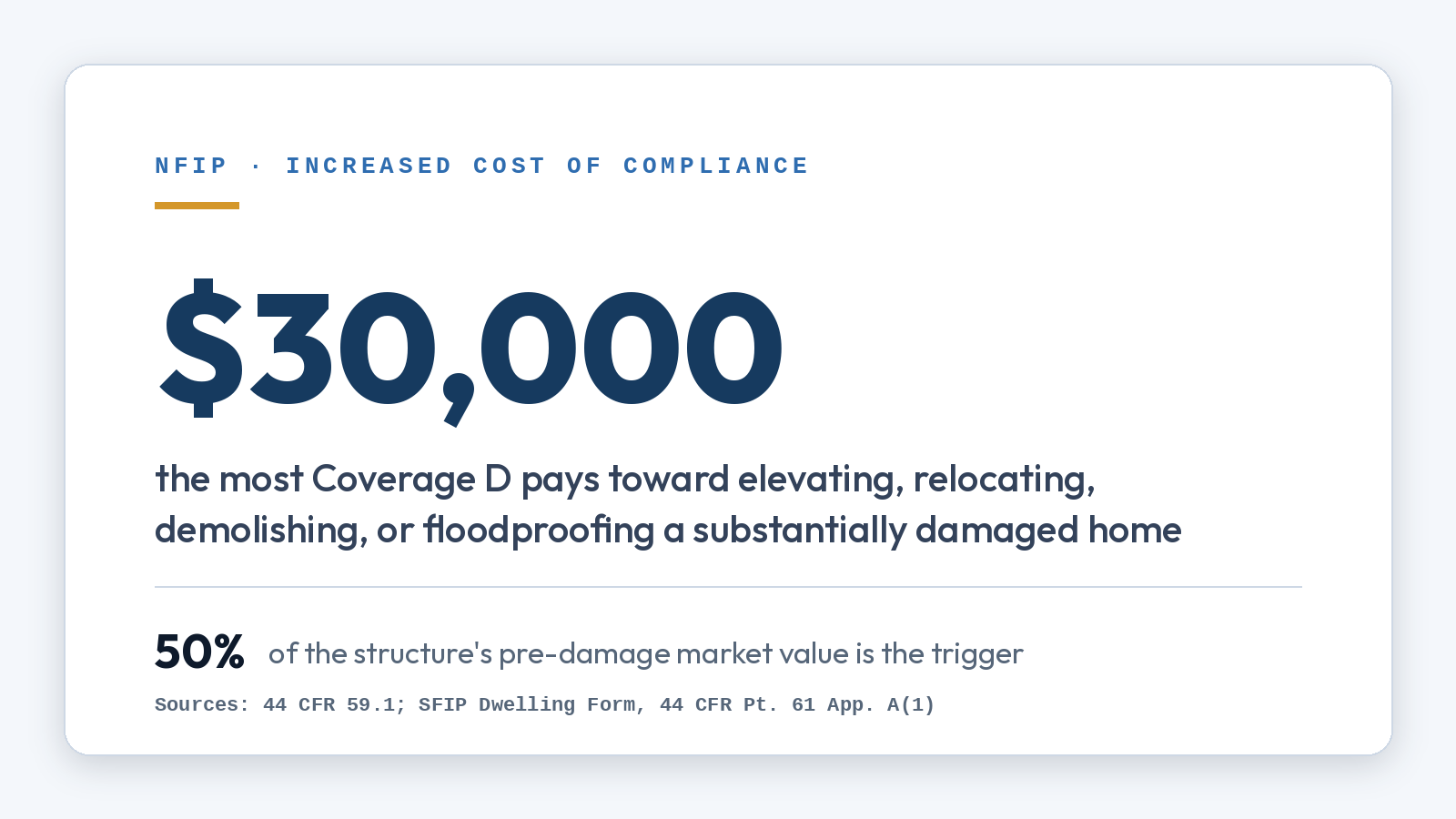
- If you carry an NFIP flood policy, Increased Cost of Compliance (ICC) coverage pays up to $30,000 toward the cost of complying, on top of your building claim, when the trigger was flood damage and the community has declared substantial damage.
- Homeowners insurance does not cover flood. The 50 percent rule matters most for people with a flood policy, and matters enormously for people without one.
General information, not legal advice. Your community's ordinance and your policy control.
The 50 percent rule is the part of a flood loss that almost nobody prepares for, because it does not come from the insurance policy. It comes from the building code. That is exactly why it catches people: they spend weeks working the claim, then discover the permit department has a separate opinion about what happens next.
We work coastal Florida and coastal South Carolina. In both, the rule is live on every property in a mapped flood zone, and in both, the way it plays out is decided by a handful of numbers that are worth understanding before a storm rather than after.
Where the 50 percent rule comes from
The National Flood Insurance Program is a deal between FEMA and local communities. FEMA makes federally backed flood insurance available inside a community. In exchange, the community adopts and enforces a floodplain management ordinance that meets minimum federal standards. Those minimum standards are in Title 44 of the Code of Federal Regulations, and the definitions are in 44 CFR § 59.1.
Two definitions carry the whole rule:
Substantial damage is damage of any origin sustained by a structure whereby the cost of restoring the structure to its before-damaged condition would equal or exceed 50 percent of the market value of the structure before the damage occurred.
Substantial improvement is any reconstruction, rehabilitation, addition, or other improvement of a structure, the cost of which equals or exceeds 50 percent of the market value of the structure before the start of construction of the improvement.
Read the first definition again and notice three things:
- "Of any origin." The damage does not have to be flood damage. Wind, fire, a tree through the roof: if the repair cost crosses 50 percent of the building's value in a flood zone, the rule applies.
- "Cost of restoring." The figure is what it would cost to restore the building to its pre-damage condition, not what you intend to spend, and not what the insurer paid.
- "Market value of the structure." The building only. Land is excluded. This is the number that makes or breaks most determinations.
When a building is substantially damaged or substantially improved, the community's ordinance treats it as new construction. It must meet the current flood requirements, which in a Special Flood Hazard Area means the lowest floor elevated at or above the Base Flood Elevation plus whatever freeboard the community requires. For a slab-on-grade house sitting below that elevation, that is the letter about lifting the house.
How the fraction is actually calculated
The rule is a fraction: cost of repairs ÷ market value of the structure. Both sides have rules.
| What counts | What does not count | |
|---|---|---|
| Numerator: cost to restore | All structural work, finishes, built-in fixtures and equipment, labor at market rates (even if you do the work yourself or get donated labor), overhead and profit | Plans and permit fees, debris removal and cleanup, landscaping and site work, detached accessory structures, contents |
| Denominator: market value of the structure | The building's depreciated value before the damage, established by an independent appraisal, or by the county property appraiser's building value (often with an adjustment factor the community sets) | Land value, the value of pools, fences, docks, and other site improvements |
Two things commonly surprise homeowners:
- Insurance value is not market value. Your dwelling limit is a replacement cost figure. Market value of an older structure is typically far lower, which makes the fraction larger. A home insured for $400,000 with a building market value of $180,000 hits 50 percent at a $90,000 repair.
- The cost is what it costs, not what you paid. If your cousin does the drywall for free, the floodplain administrator will still count drywall at the going rate. If you leave the kitchen unrepaired to stay under the line, the administrator can still count the kitchen, because the definition is the cost of restoring the building to its pre-damage condition.
Communities may adopt stricter versions. Some count improvements and repairs cumulatively over a period of years so that a series of small projects cannot avoid the threshold. Some set the trigger below 50 percent. Your community's ordinance, not the federal minimum, is what applies to you, and your floodplain administrator will tell you which version you are under.
Pro tip: before you sign a contractor's repair contract after a flood, ask the building department for the substantial damage determination in writing, including the market value figure they used and where it came from. If the value is the property appraiser's number, ask whether the community accepts an independent appraisal instead. A current appraisal that comes in higher than the tax roll figure can move a determination from over the line to under it.
Who makes the determination, and when
FEMA does not inspect your house. Your insurer does not decide. The determination belongs to the local floodplain administrator, usually inside the building department, and it is made when you apply for a permit to repair.
After a major event, communities often go proactive: teams perform preliminary damage assessments street by street and mail determination letters before anyone has applied for anything. Those letters are the ones that arrive out of nowhere.
The process, in general terms:
- Preliminary assessment. After a disaster, the community inspects, estimates damage using FEMA's methodology, and issues preliminary determinations.
- Permit application. You, or your contractor, apply to repair. You submit the cost of the work, and the community compares it to the building's market value.
- Determination letter. The community issues a written finding: substantially damaged or not.
- Appeal or additional information. Most communities allow you to submit a licensed appraisal of the building's pre-damage market value, a detailed contractor estimate, or both, to reconsider a determination.
- Compliance or repair. If not substantial, you repair. If substantial, the permit is conditioned on bringing the building into compliance.
What the determination is not: it is not a demolition order. A substantially damaged home can be elevated and repaired. It is also not permanent. If the appeal shows the fraction is under 50 percent with correct numbers, the finding changes.
What compliance means for a house
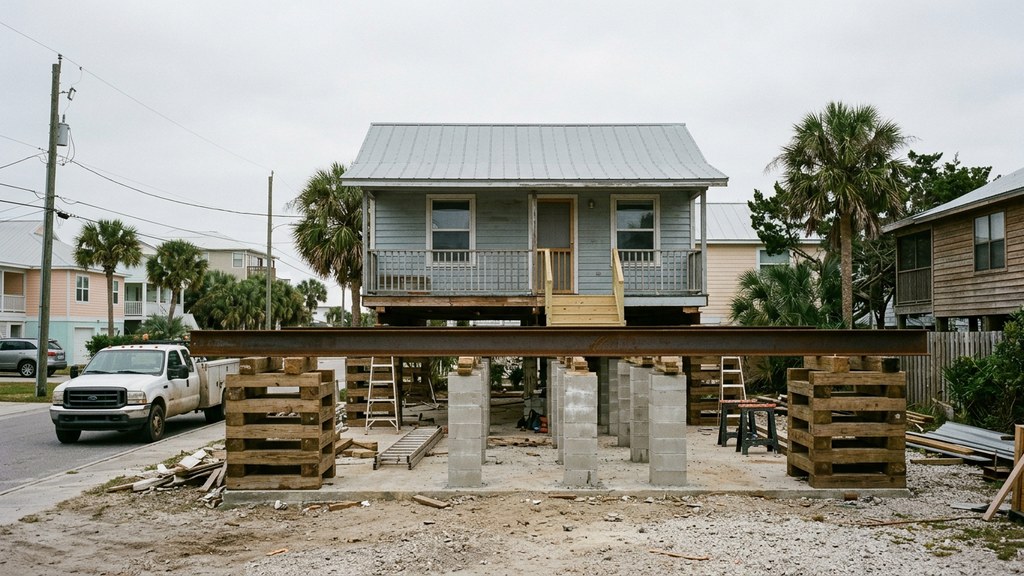
For a residential building in a Special Flood Hazard Area, compliance almost always comes down to elevation. The options, which are also the four things ICC coverage will pay for:
| Option | What it involves | When it fits |
|---|---|---|
| Elevation | Lifting the building and setting it on a new foundation at or above the required elevation | Most single-family homes on slab or crawlspace |
| Relocation | Moving the building to a lot outside the flood hazard area | Rare, but real for movable structures |
| Demolition | Removing the building and rebuilding to code, or not rebuilding | When elevation costs approach or exceed rebuilding |
| Floodproofing | Making the building watertight | Non-residential buildings only under NFIP rules |
The cost of elevating a home varies enormously with its size, foundation type, and site, and it is routinely a six-figure number. That is the gap ICC was created to help close, and the reason the coverage amount matters.
Increased Cost of Compliance: the coverage most flood policyholders do not know they have
Every NFIP Standard Flood Insurance Policy on a building includes Coverage D, Increased Cost of Compliance. Under the Dwelling Form at 44 CFR Part 61, Appendix A(1)_to_part_61), it pays up to $30,000 toward the cost of complying with the community's floodplain management law after a qualifying flood loss. FEMA's own ICC overview describes the same limit and the same four mitigation options.
The conditions:
- The damage must be flood damage as the policy defines it. Substantial damage from wind alone does not trigger ICC, even though it triggers the ordinance.
- The community must have declared substantial damage and must be enforcing a substantial damage provision. Without the letter, there is no ICC claim.
- A repetitive loss trigger also exists. A building with two flood losses in ten years where repair costs averaged 25 percent or more of market value each time qualifies if the community's ordinance has a cumulative or repetitive loss provision and is enforcing it.
- The work is on a clock. The policy requires compliance work to be completed as soon as reasonably possible after the loss, not to exceed two years, and extensions are handled through the insurer.
- There is a combined ceiling. ICC plus building coverage cannot exceed the statutory maximum for the building, which for a single-family home is $250,000.
Practically, the ICC claim is a separate claim under the same policy. You file it with the same insurer or Write Your Own carrier, you attach the community's substantial damage determination, and you document the compliance work. It pays as the work is done and completed, not as a lump sum on the day the letter arrives.
Pro tip: if you carry flood insurance, do not settle and close your flood claim before the substantial damage question is resolved. ICC depends on the community's determination, and the determination depends on numbers that get argued for weeks. Keep the flood file open, keep every estimate, and make sure the adjuster knows an ICC claim may follow.
Florida and South Carolina: what to know locally
Both states are NFIP participants with active coastal floodplain programs, and both have building codes that incorporate the substantial damage and substantial improvement concept for construction in flood hazard areas.
In Florida, the Florida Building Code carries the flood provisions, and coastal counties and cities layer their own ordinances on top, frequently with freeboard above the Base Flood Elevation and, in some communities, cumulative substantial improvement tracking. Florida's homeowners statute is also relevant: Fla. Stat. § 627.7011(1) requires insurers to offer law and ordinance coverage at 25 percent or 50 percent of the dwelling limit. That coverage responds when a covered homeowners peril (wind, for example) causes damage that triggers code upgrade costs. It does not respond to flood, which homeowners policies exclude. After a hurricane, sorting out which damage was wind and which was surge decides not just the claims but which coverage, if any, helps with compliance.
In South Carolina, the state building code likewise incorporates flood-resistant construction, and the coastal communities from Hilton Head through Charleston to Myrtle Beach administer their own floodplain ordinances. The same 50 percent federal minimum applies, with local variations. The South Carolina property insurance claims guide covers the notice and deadline landscape for the homeowners side of a storm loss.
In both states, a house without flood coverage that is substantially damaged by surge is the hardest situation we see, because there is no building claim, no ICC, and a compliance requirement all the same. Disaster assistance and mitigation grants exist in that scenario, but they are not insurance and they do not pay the way insurance does.
What we see in the field
The first pattern is the wind-versus-water fight inside a substantial damage case. After a hurricane, the homeowners carrier attributes damage to surge and the flood carrier attributes it to wind, and the building department attributes all of it to the fraction. The homeowner is left with a compliance requirement and two insurers each pointing at the other. Documenting the wind damage precisely, with the timeline and the physical evidence, is what makes the homeowners policy and its law and ordinance coverage respond to its share.
The second is the market value nobody questioned. The determination used the tax roll building value. A licensed appraisal of the pre-storm structure came in meaningfully higher. The fraction dropped below 50 percent, the compliance requirement fell away, and the family repaired the house they had. The building department had never refused the appraisal. Nobody had offered one.
The third is the flood claim closed too early. The homeowner accepted the building payment, signed the release, and only later received the substantial damage letter. ICC was still available, but reconstructing the file, the estimates, and the communication months later was far harder than keeping the claim open would have been.
How Vanguard Claims Solutions helps
We are licensed public adjusters. We represent property owners, never insurers.
On a loss that touches the 50 percent rule, we do the work on the insurance side so that the compliance side has the right numbers to work with: a complete, itemized scope of the covered damage; a clear separation of wind damage from water damage after a hurricane; and a claim file that stays open and organized until the community's determination is final and any ICC claim is documented.
We also tell you plainly when something is outside our lane. The substantial damage determination and any appeal of it run through your building department, and market value questions are for a licensed appraiser. What we can do is make sure the insurance recovery, including law and ordinance coverage and ICC where they apply, is complete rather than a first offer.
There are no upfront fees and no recovery, no fee. The fee for your claim is set out in the written contingency agreement before you sign anything.
Andrew Pichardo · FL Public Adjuster Lic. #W493213 · SC Public Adjuster License #18873906
Call (305) 336-3302 or request a free claim review.
Key takeaways
| Question | Short answer |
|---|---|
| What is the FEMA 50 percent rule? | If restoring a flood-zone building costs 50 percent or more of its pre-damage market value, it must be brought into compliance with current flood standards |
| Does it only apply to flood damage? | No. Damage of any origin counts toward the fraction. Only the ICC insurance benefit is limited to flood |
| Who decides? | The local floodplain administrator, at permit time, not FEMA or your insurer |
| What is "market value"? | The building alone, before the damage, excluding land. Usually the appraisal or property-appraiser figure |
| What does compliance mean? | For most homes, elevation to at or above the Base Flood Elevation plus local freeboard |
| What is ICC? | NFIP coverage of up to $30,000 toward elevation, relocation, demolition, or floodproofing after a flood-caused substantial damage declaration |
| Can a determination be challenged? | Yes. A licensed appraisal of the structure's pre-damage value and a detailed estimate are the usual tools |
FAQ
What is the FEMA 50 percent rule in simple terms?
If your home is in a mapped flood hazard area and the cost to repair it after damage equals or exceeds half of what the building alone was worth before the damage, the local government treats it as substantially damaged. Under the community's floodplain ordinance, adopted to participate in the National Flood Insurance Program, the home must then be brought up to current flood standards, which usually means elevating it. The definition is in 44 CFR § 59.1.
Does the 50 percent rule apply if I do not have flood insurance?
Yes. The rule is a building code and floodplain ordinance requirement enforced through the permit process. It applies to every structure in the community's flood hazard area whether or not it is insured. Flood insurance matters because it is the source of the building payment and of ICC coverage that help pay for compliance.
How is market value determined for the 50 percent rule?
The community decides which sources it accepts. Common methods are a licensed appraisal of the structure's pre-damage value, or the county property appraiser's building value, sometimes with an adjustment factor. Land value is always excluded. Because the appraisal is frequently higher than the tax roll figure, an appraisal is the most common way homeowners successfully challenge a determination.
What does Increased Cost of Compliance coverage pay for?
Under the NFIP Standard Flood Insurance Policy, ICC pays up to $30,000 toward the cost of elevating, relocating, demolishing, or floodproofing a building after the community declares it substantially damaged by flood, or after repetitive flood losses where the community enforces a repetitive loss provision. It is a separate claim under the same flood policy, it requires the community's written determination, and the work must be completed within the policy's time limit unless extended.
Can I avoid the 50 percent rule by repairing in stages or doing the work myself?
Generally not. The rule measures the cost of restoring the building to its pre-damage condition, including labor at market value regardless of who performs it, and many communities track repairs and improvements cumulatively over a period of years. Attempting to phase work to stay under the threshold can result in a stop-work order and a compliance requirement later. Ask the floodplain administrator how your community counts before you plan the repair.
Recommended reading
Dealing with this claim right now?
A licensed adjuster will review your loss and policy for free, with no obligation.